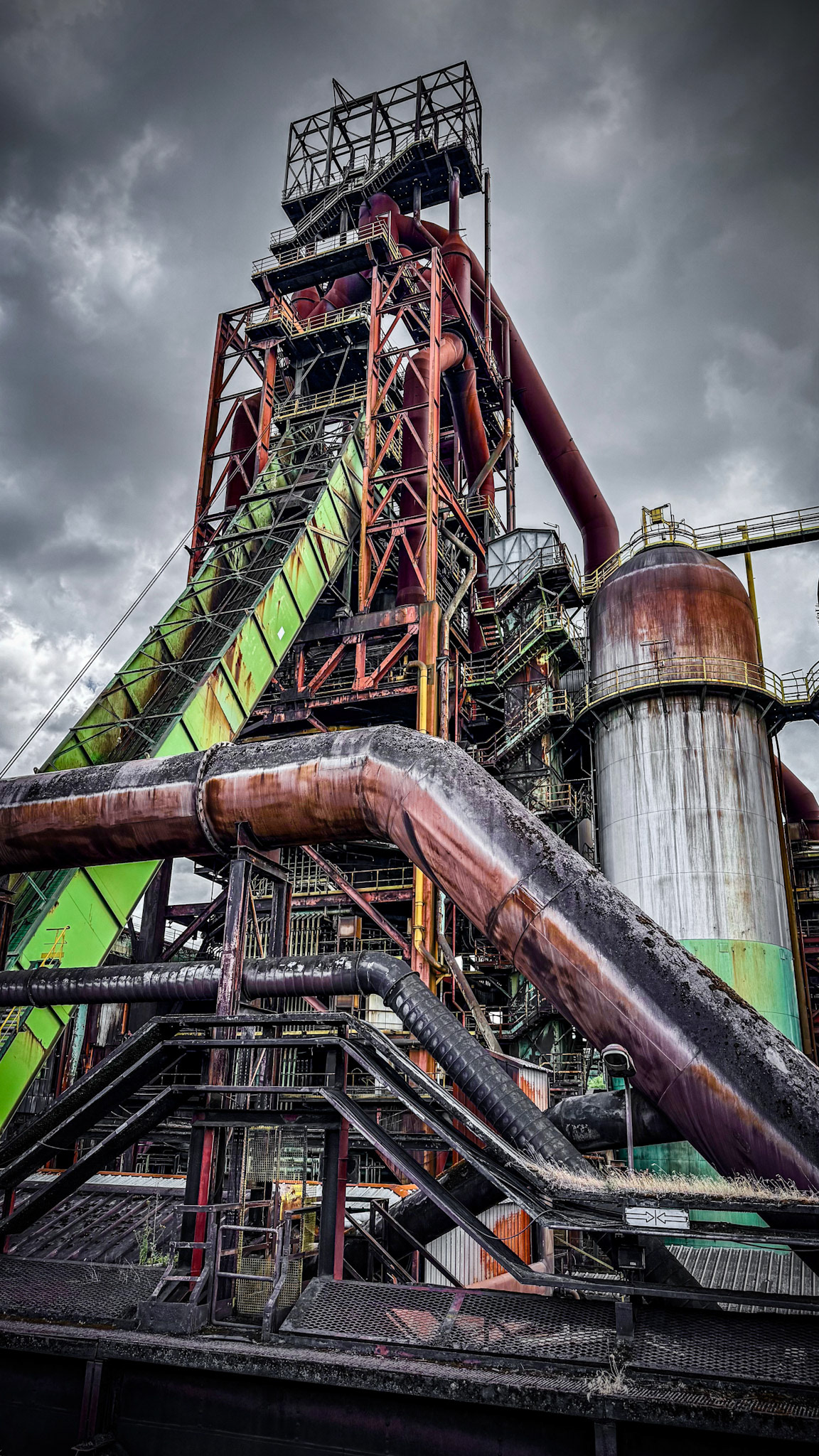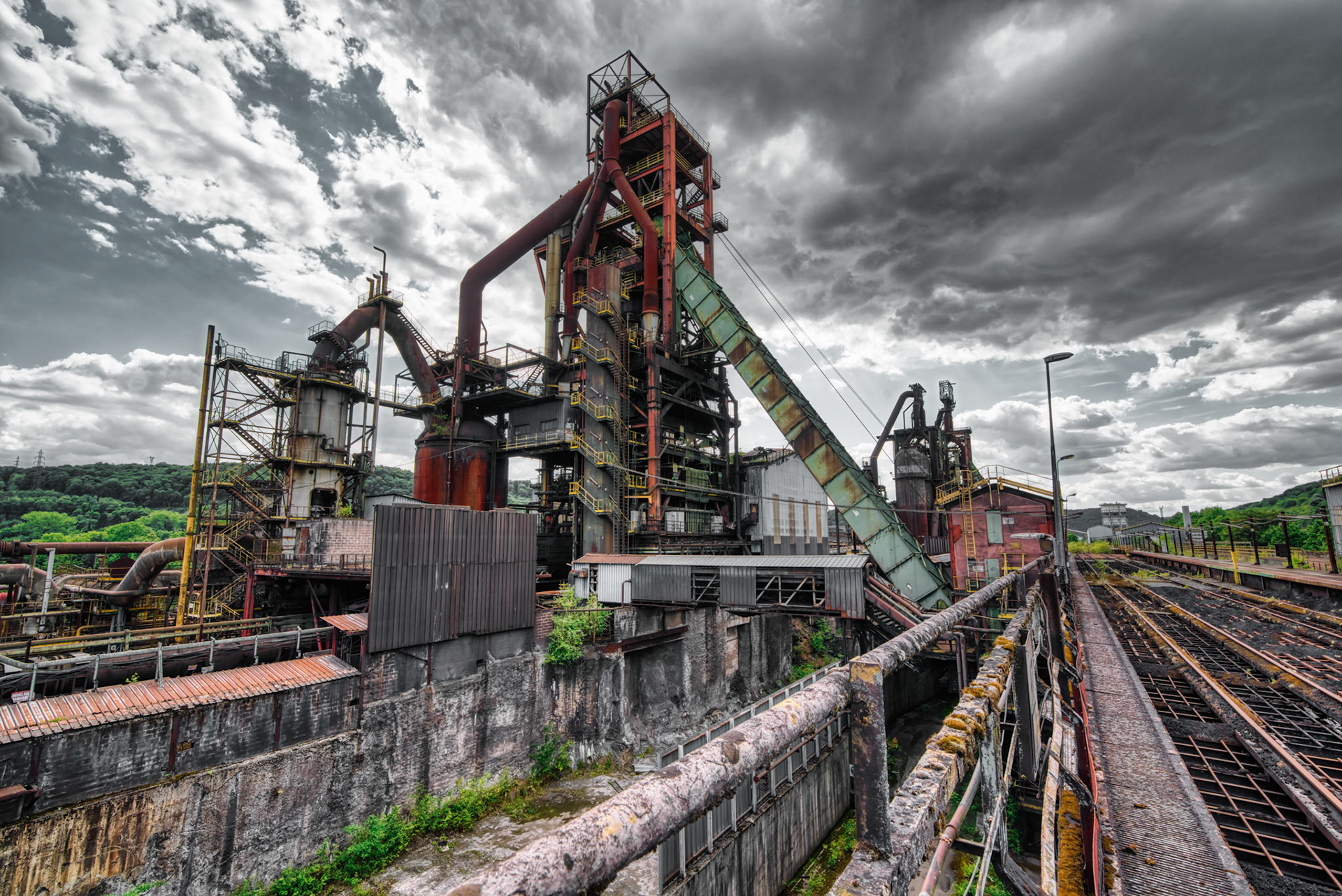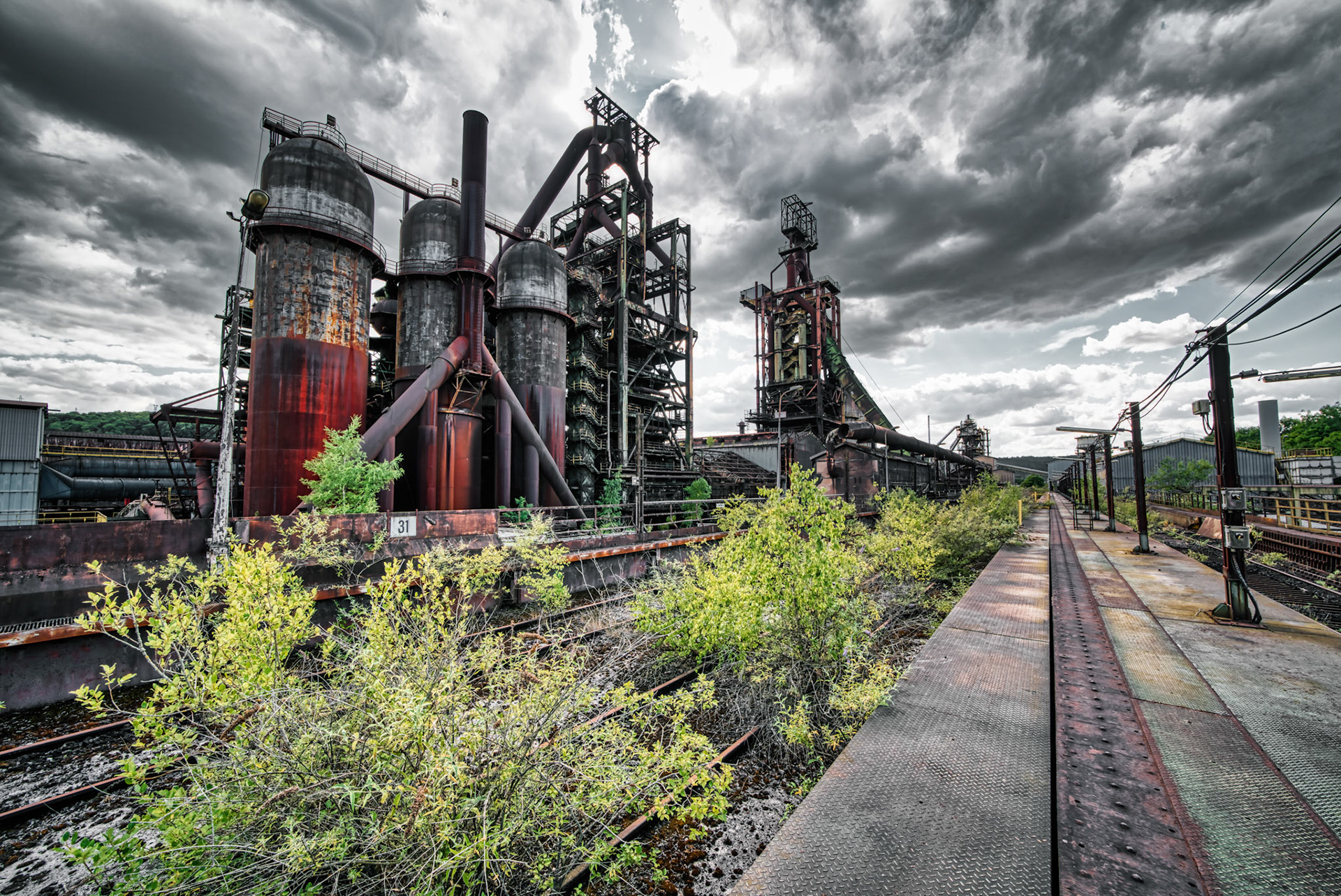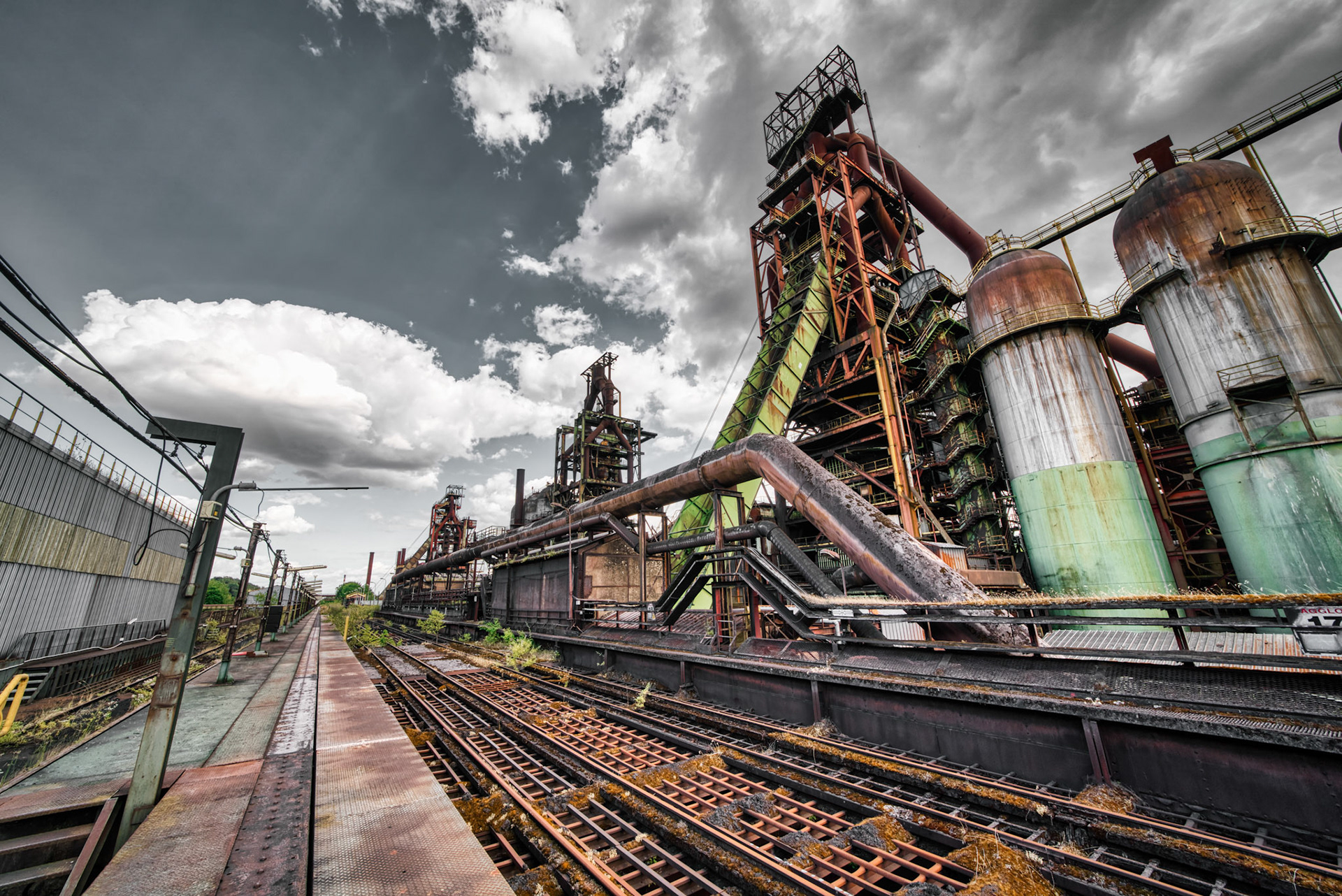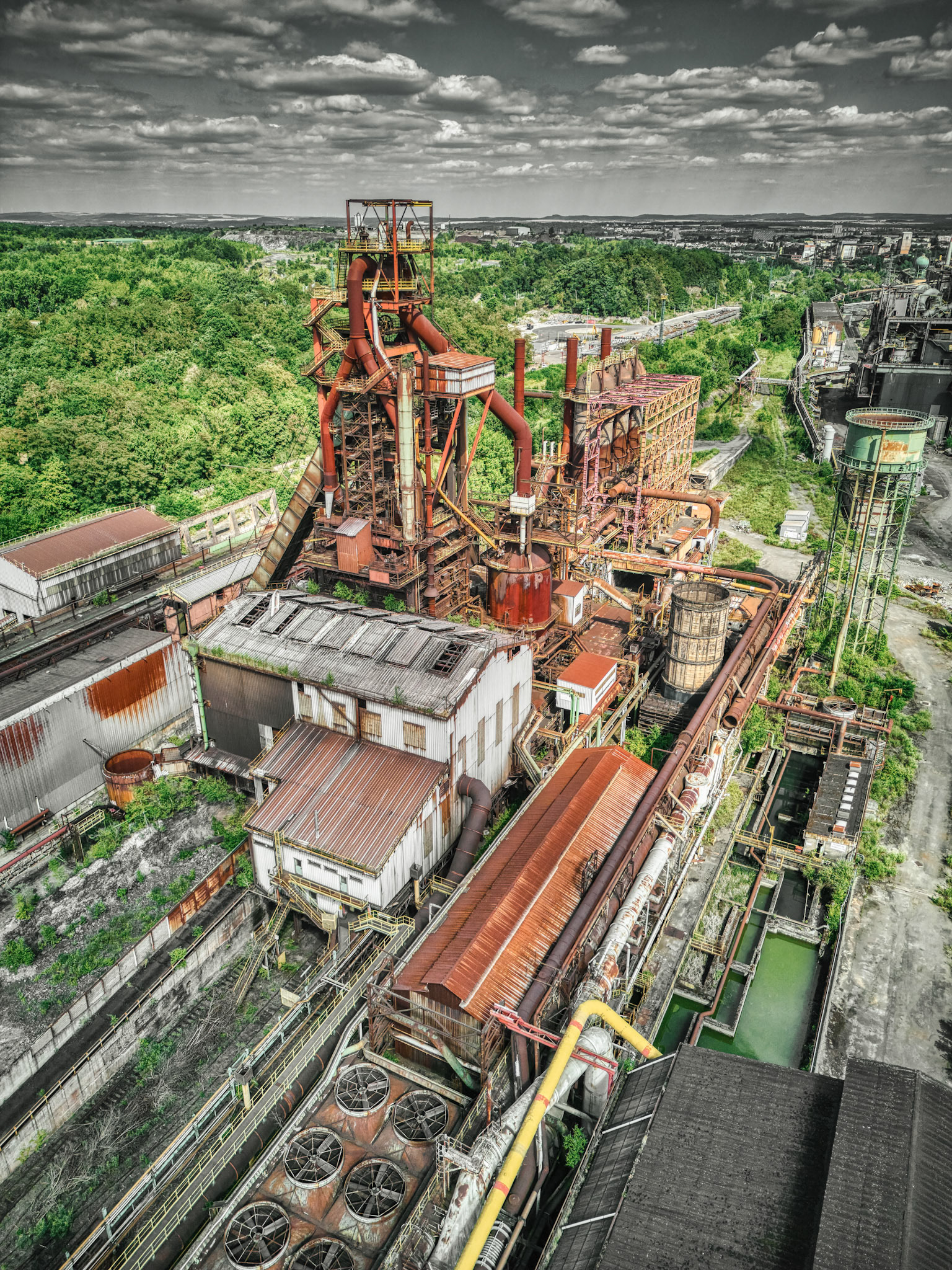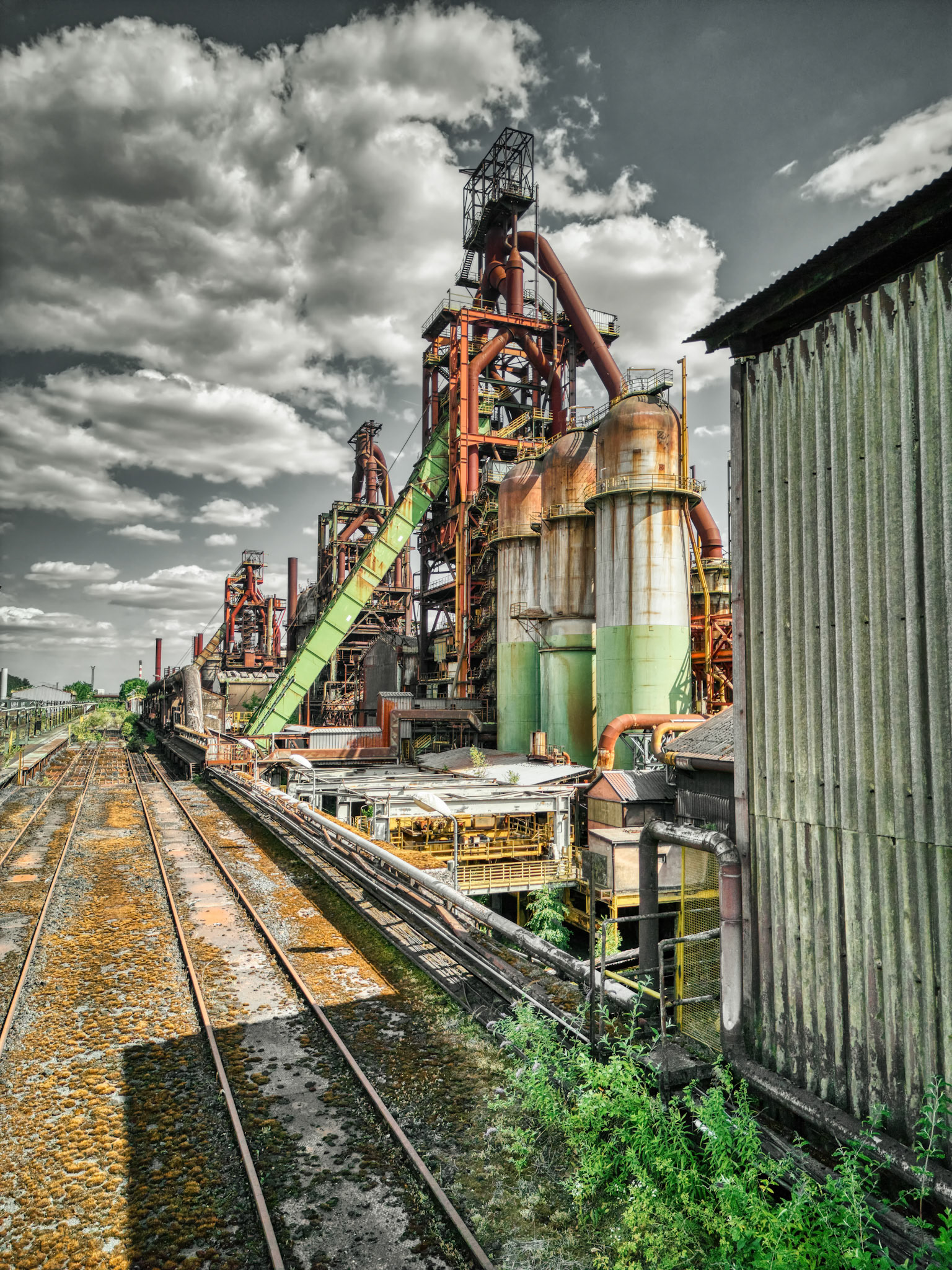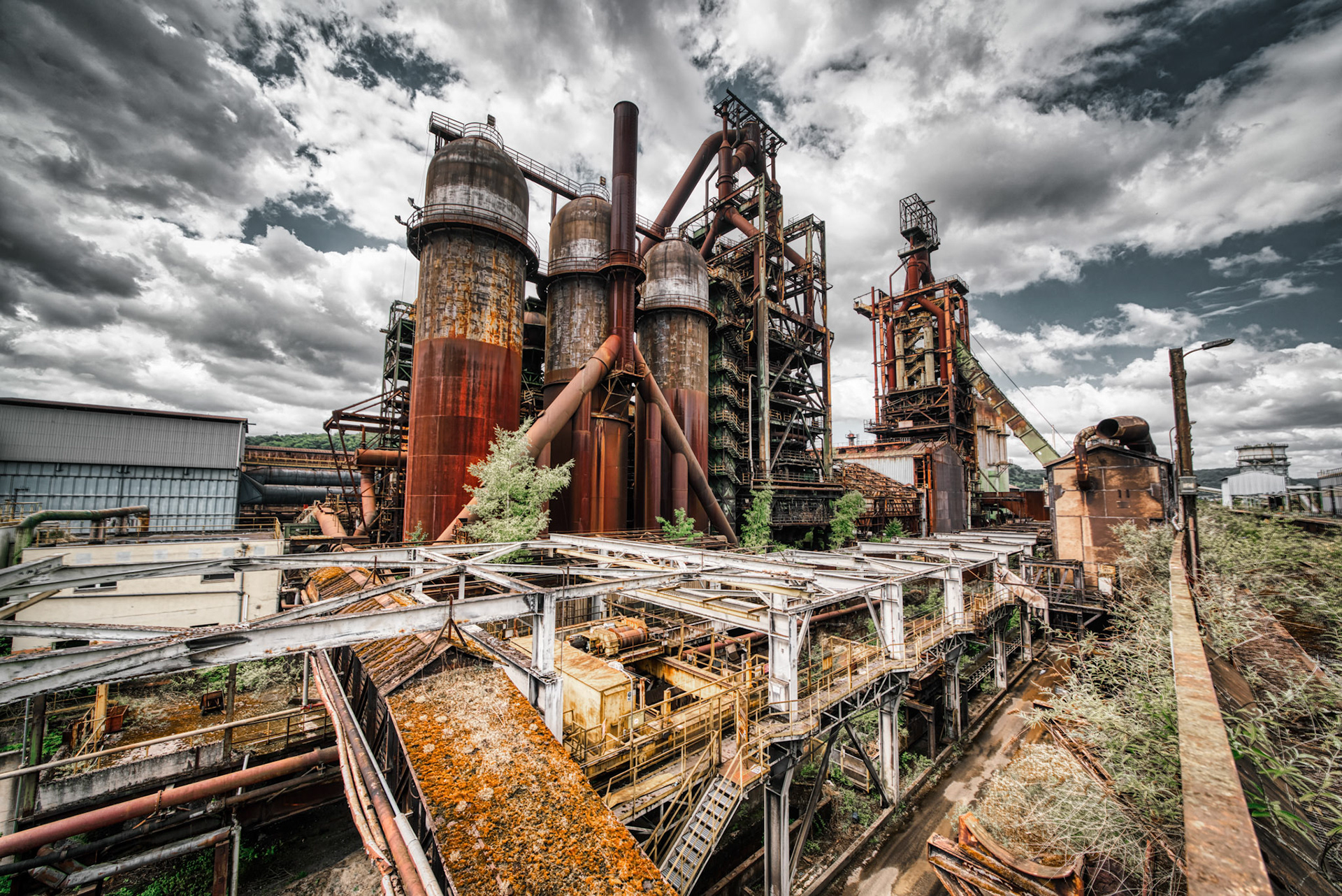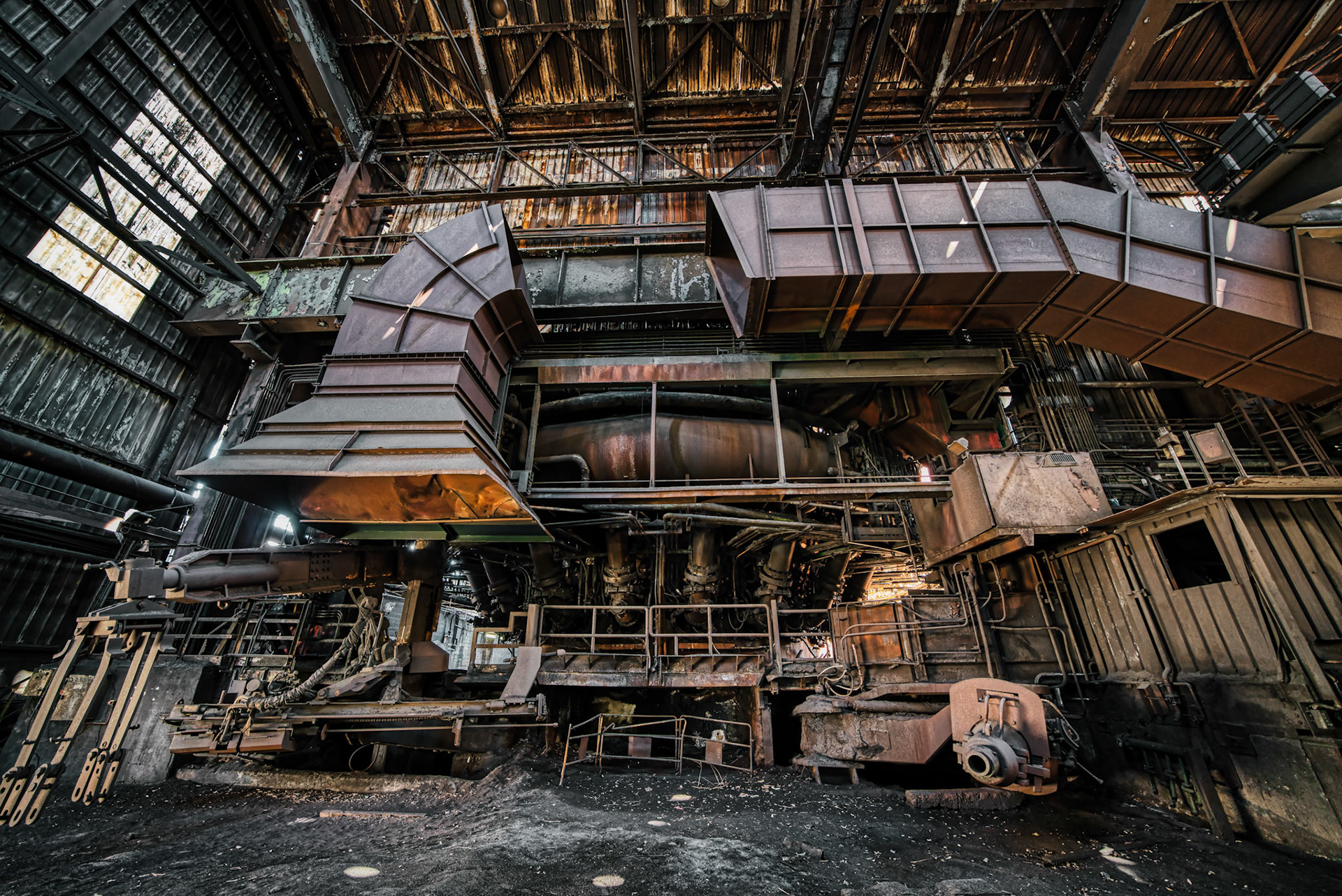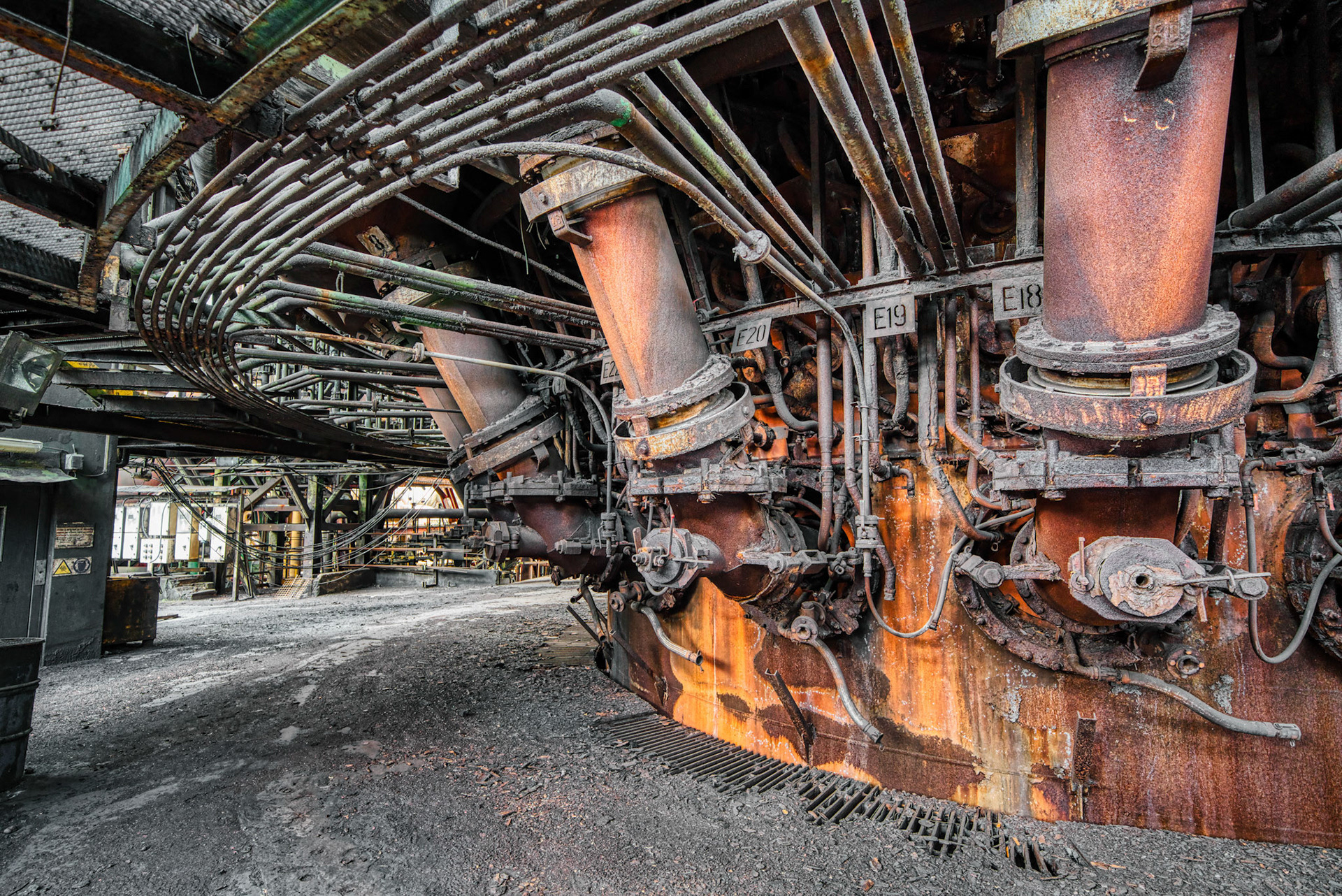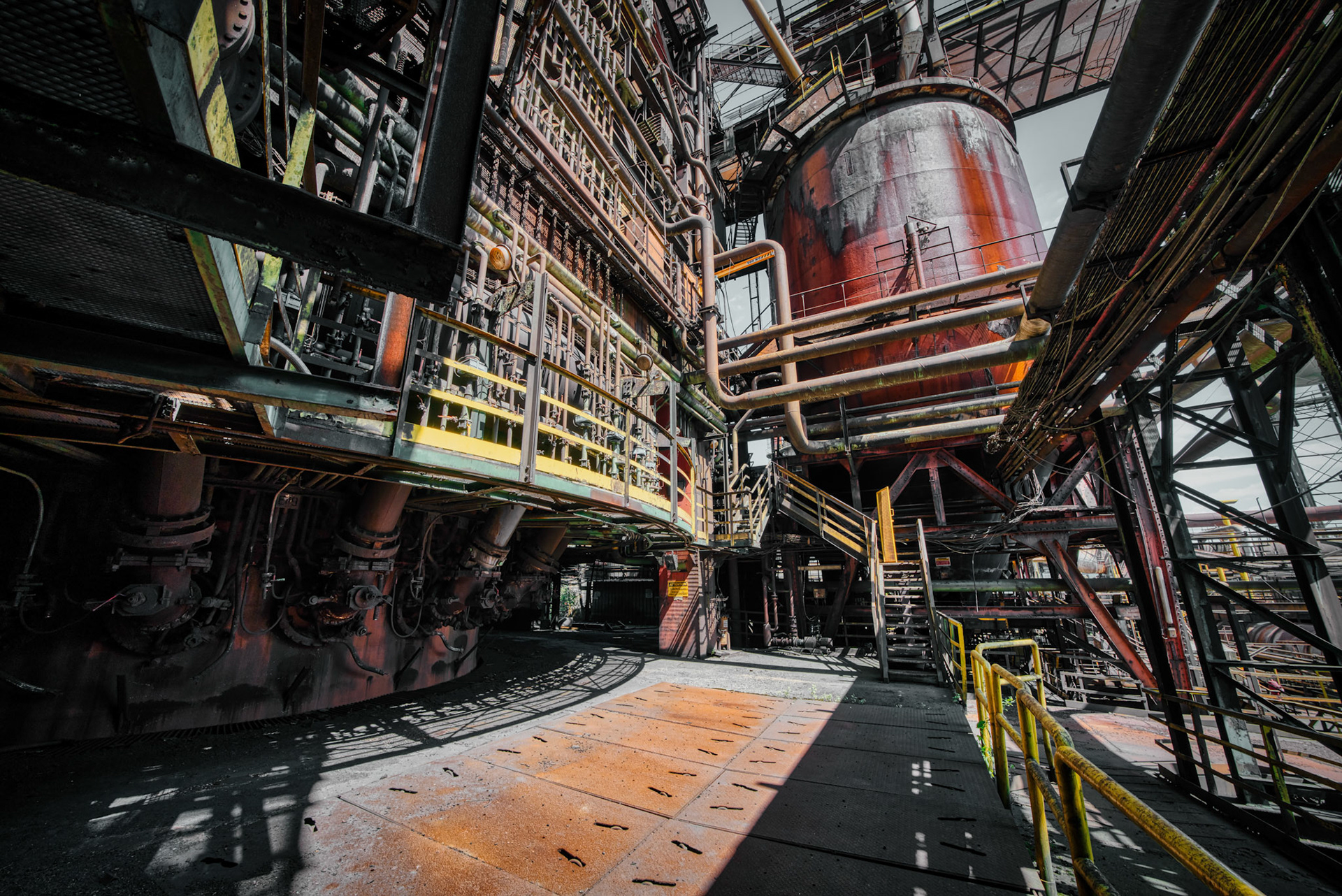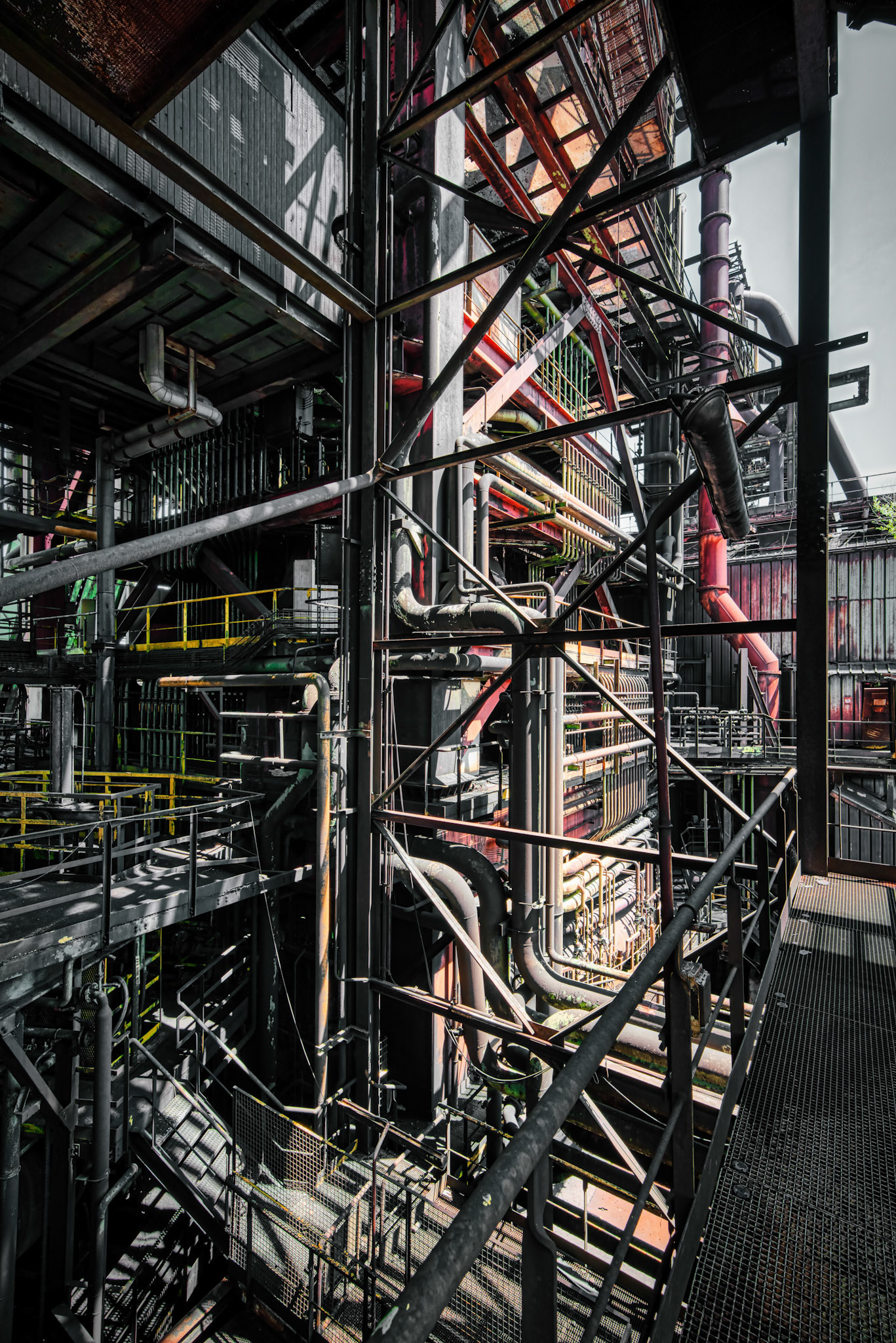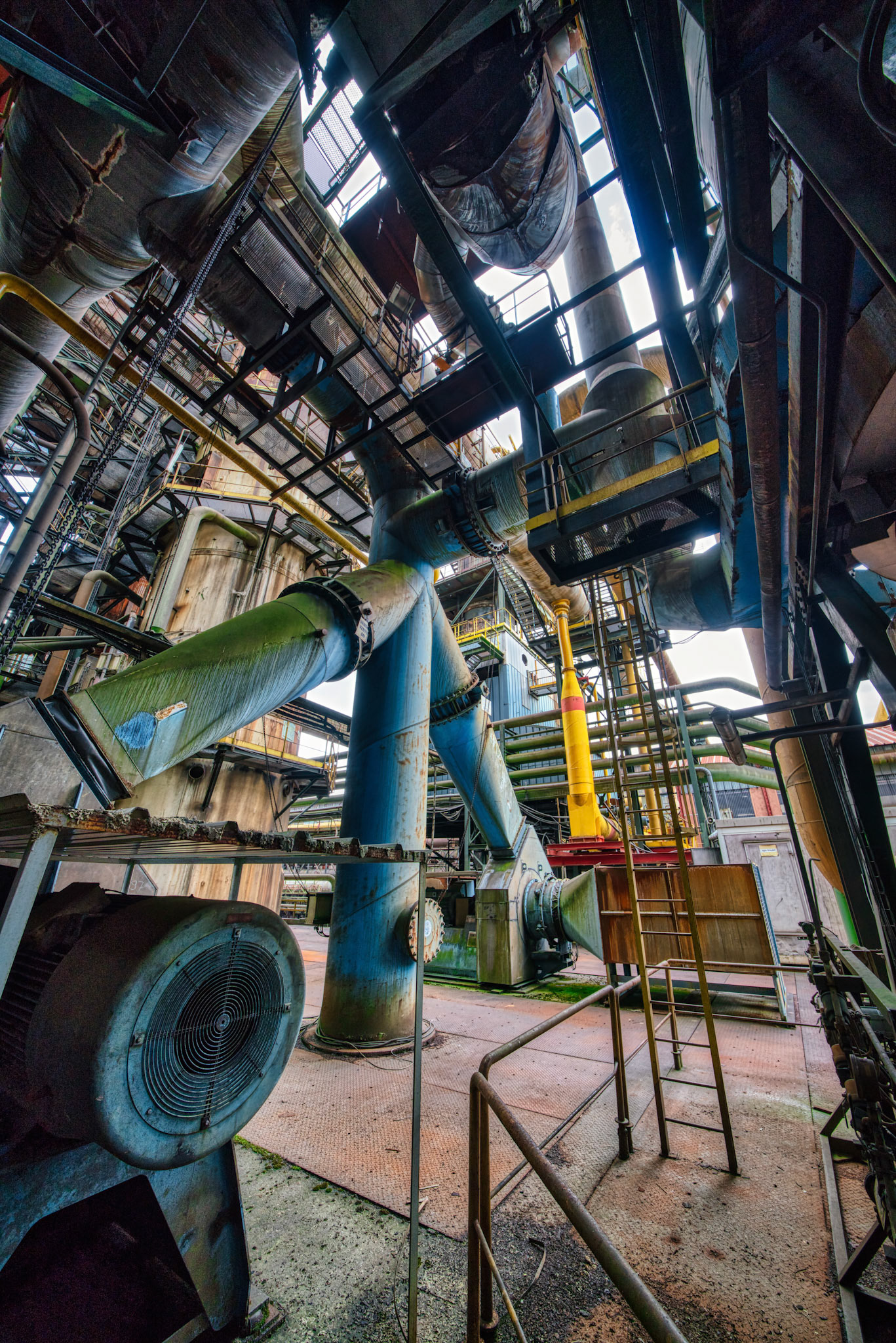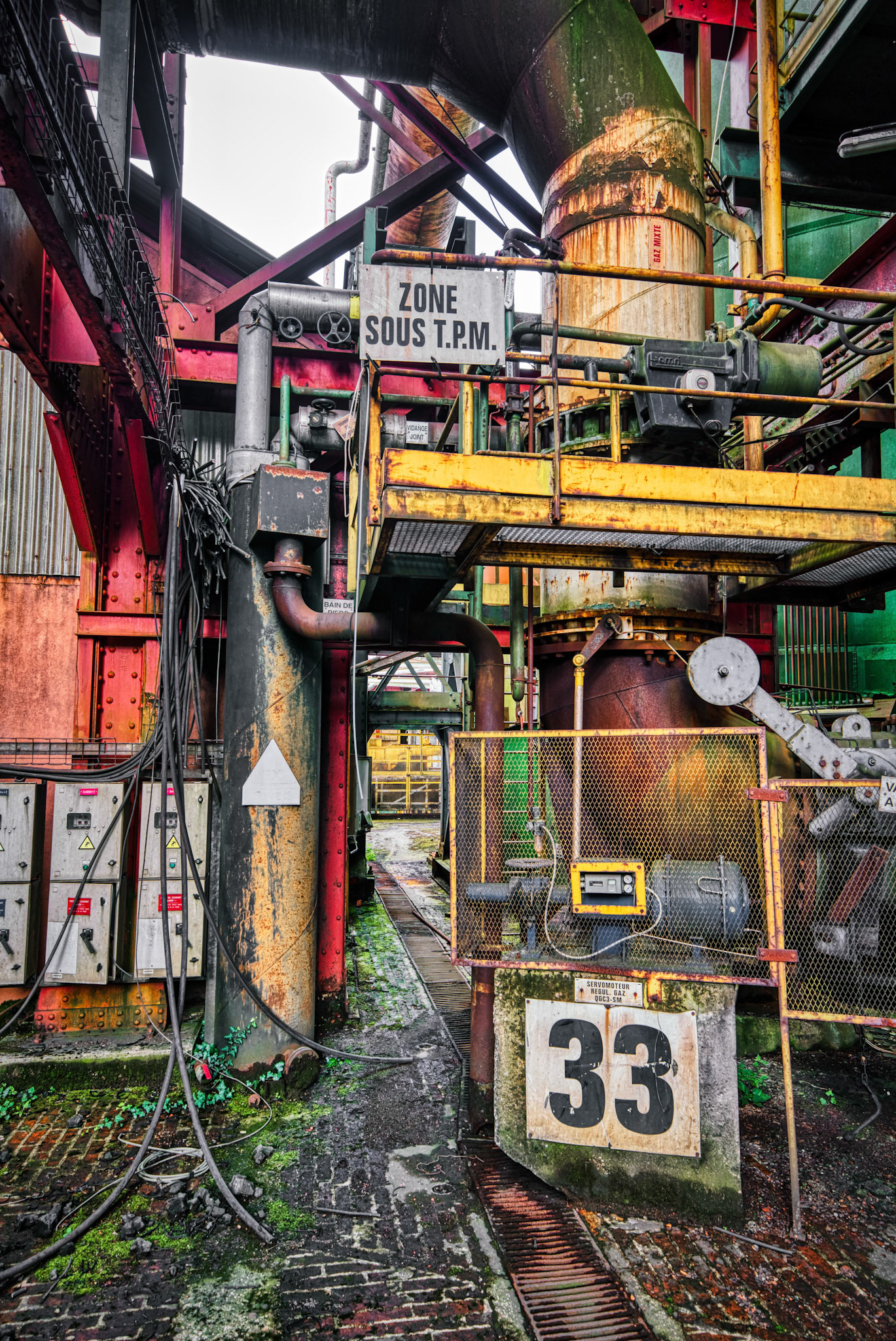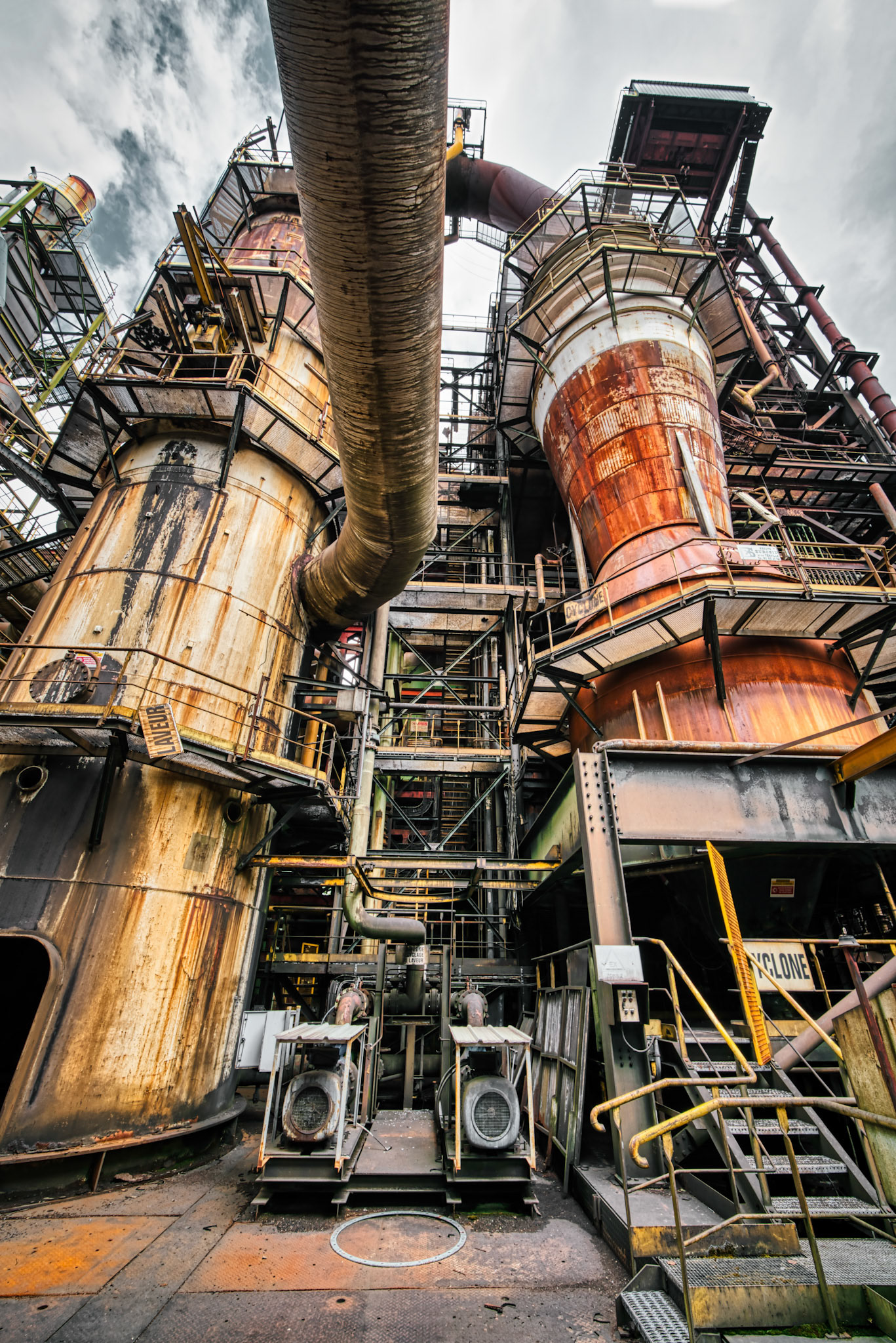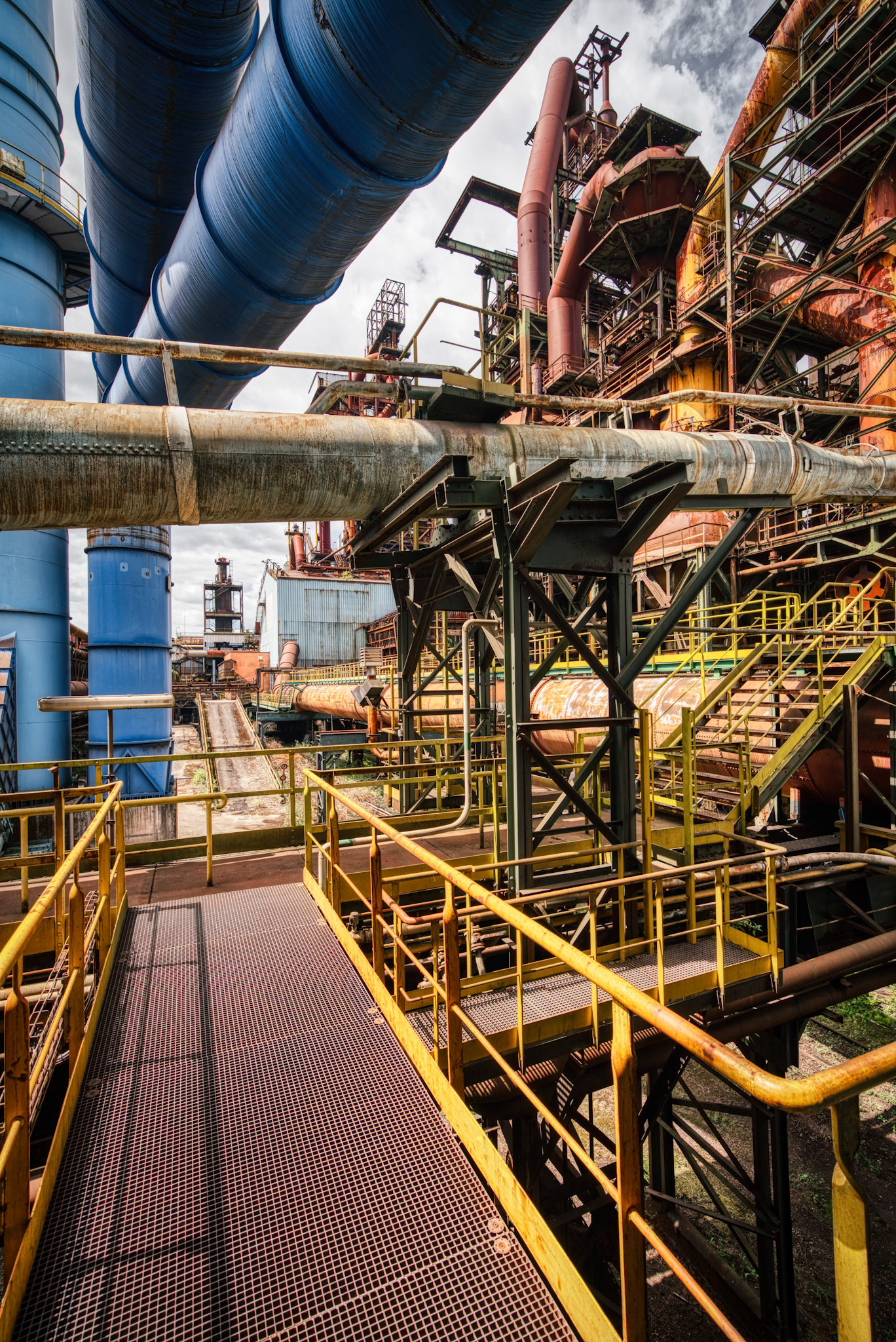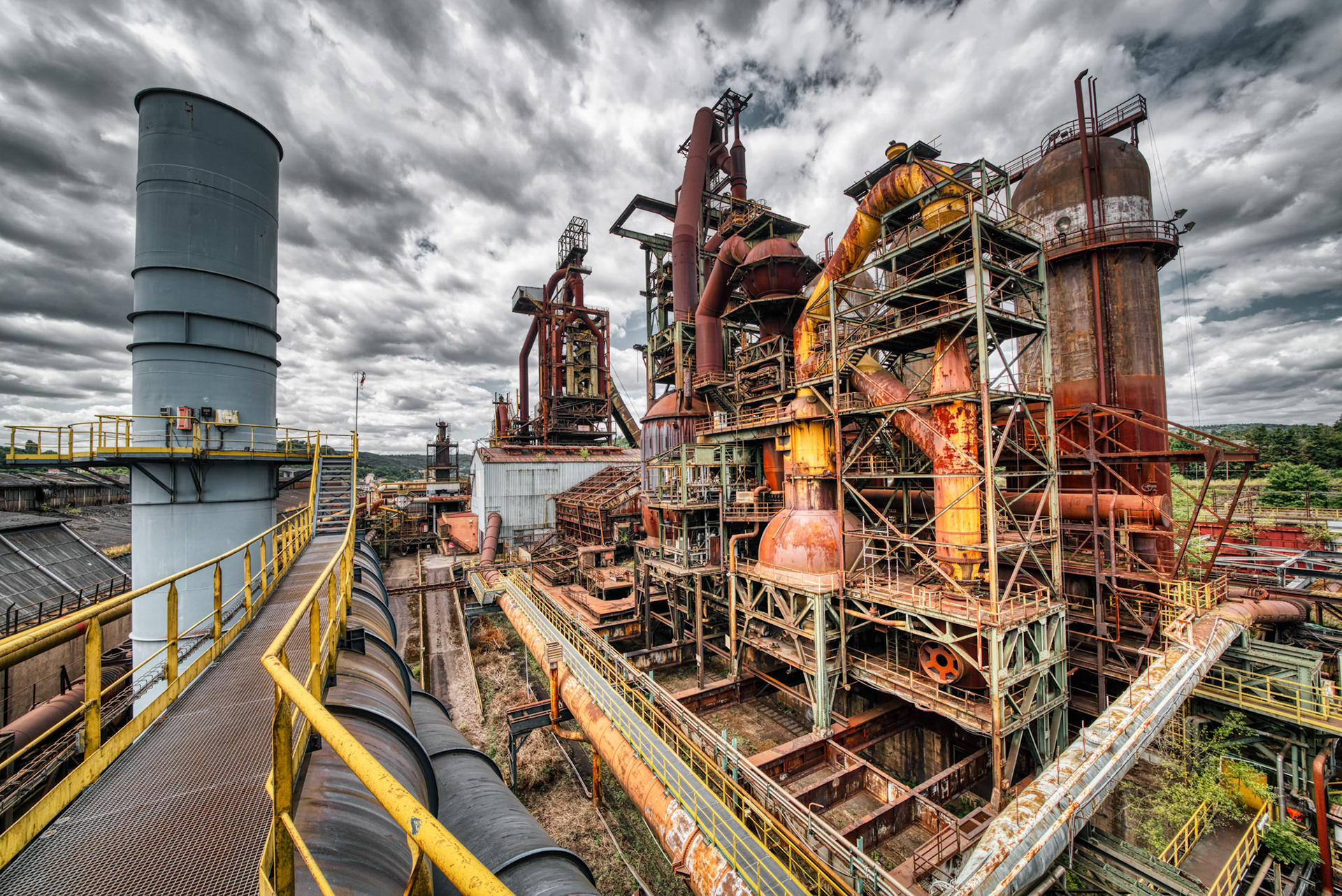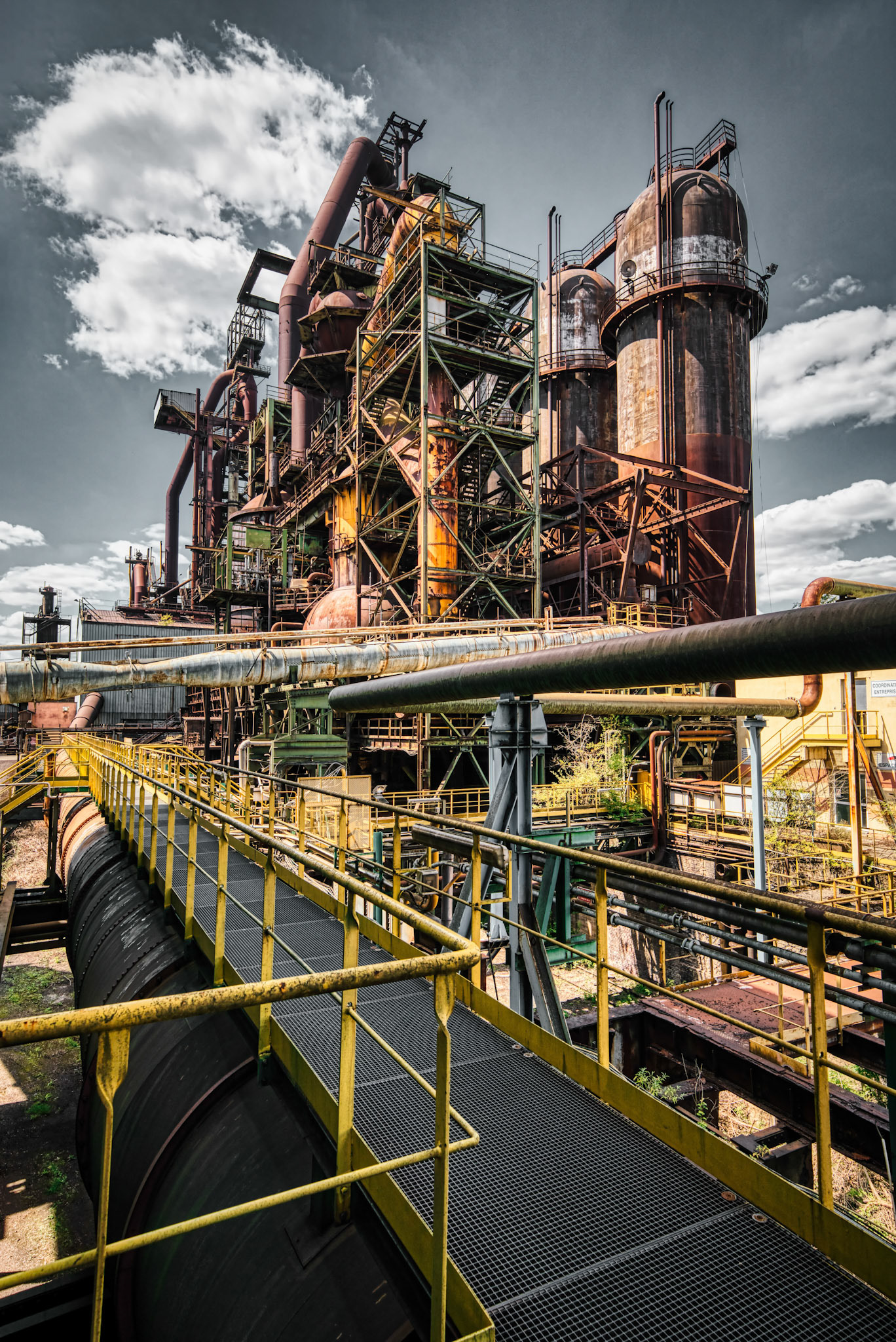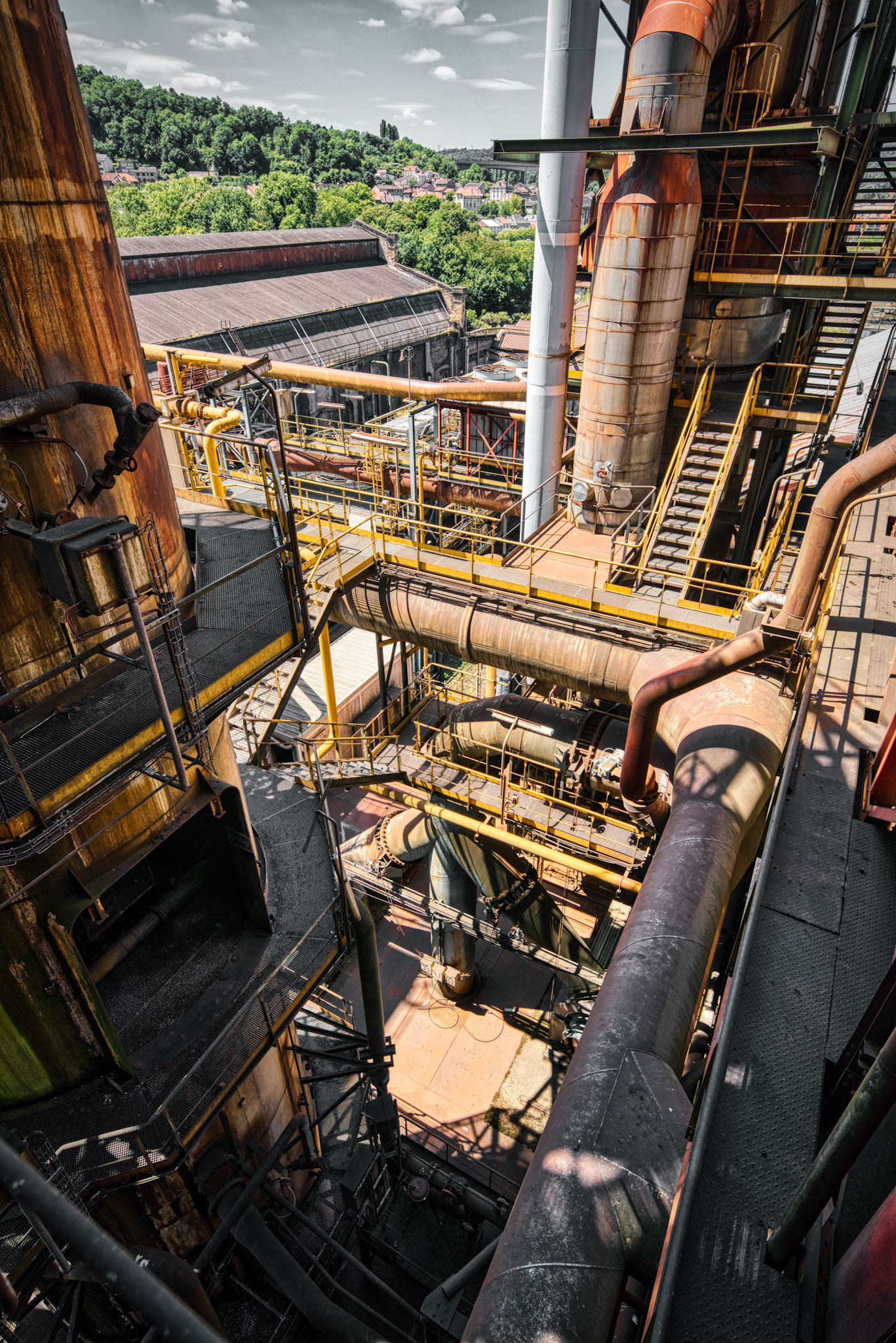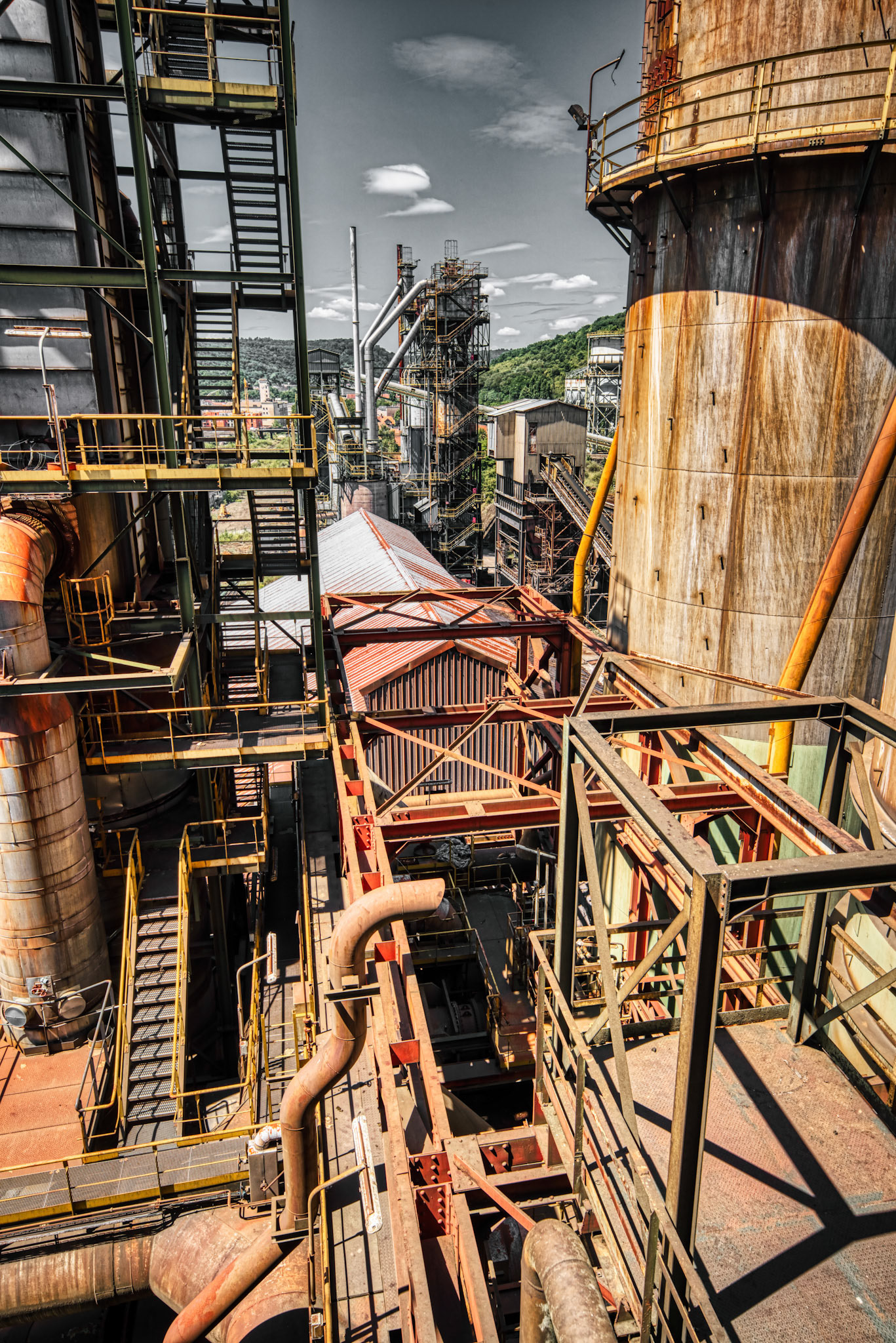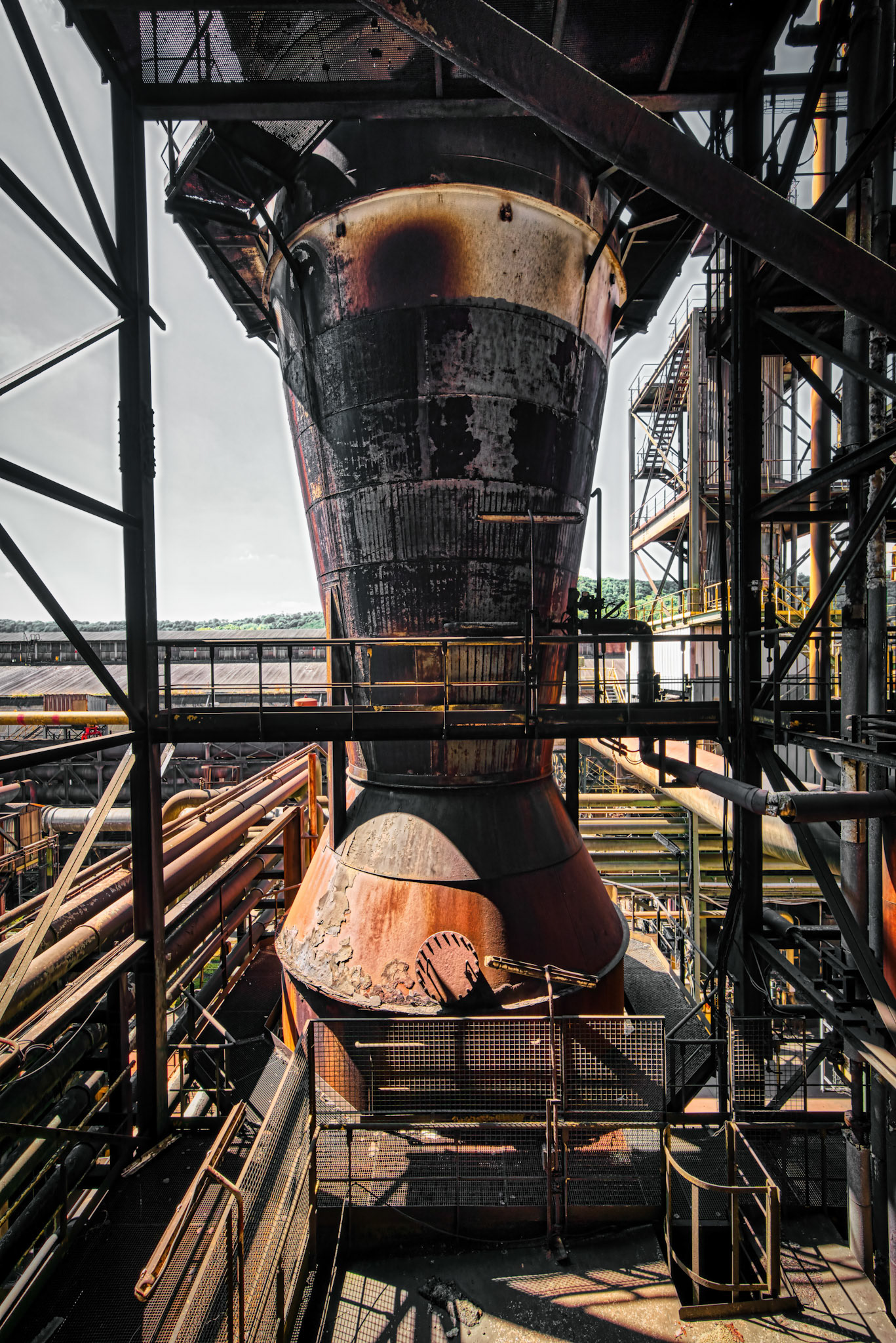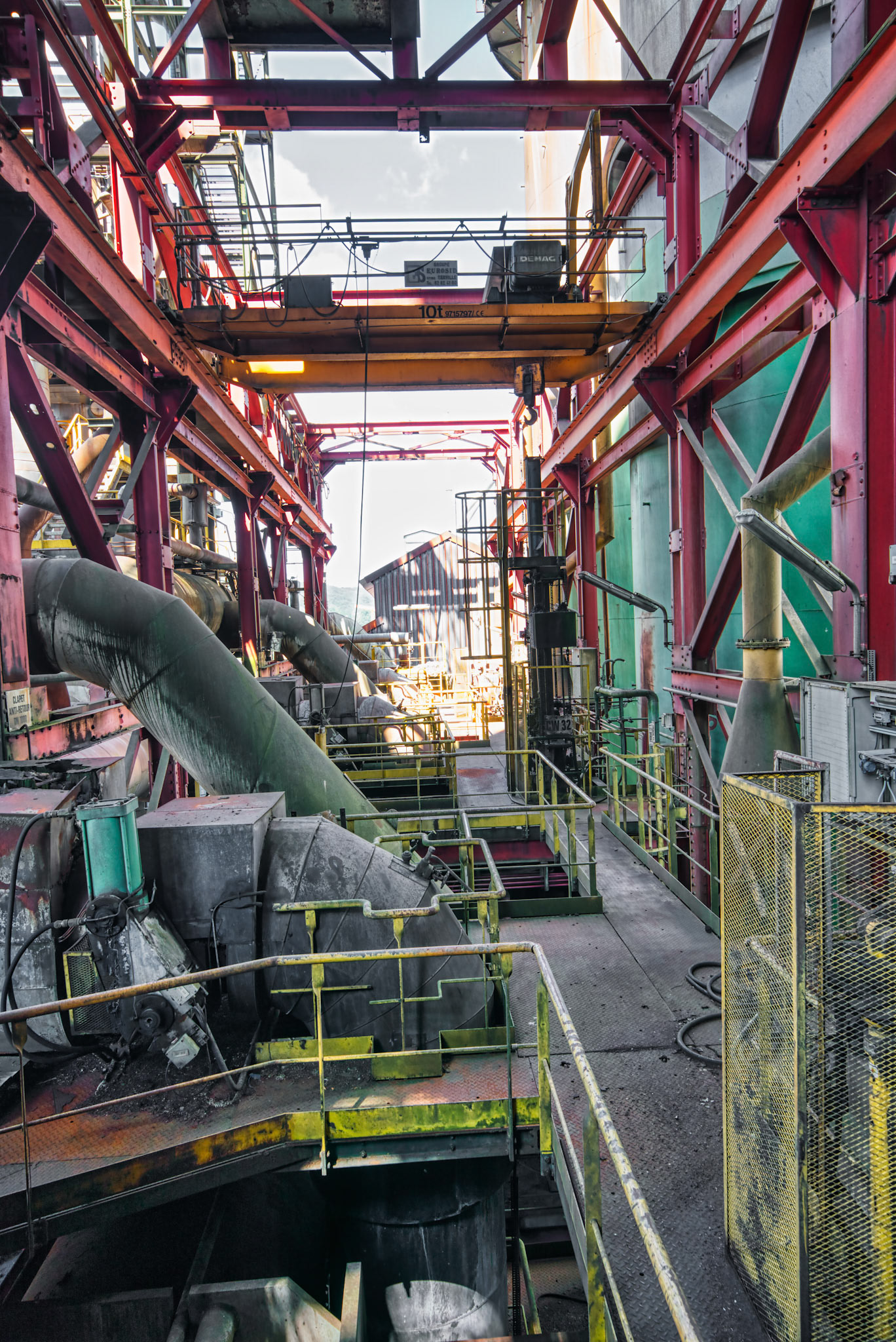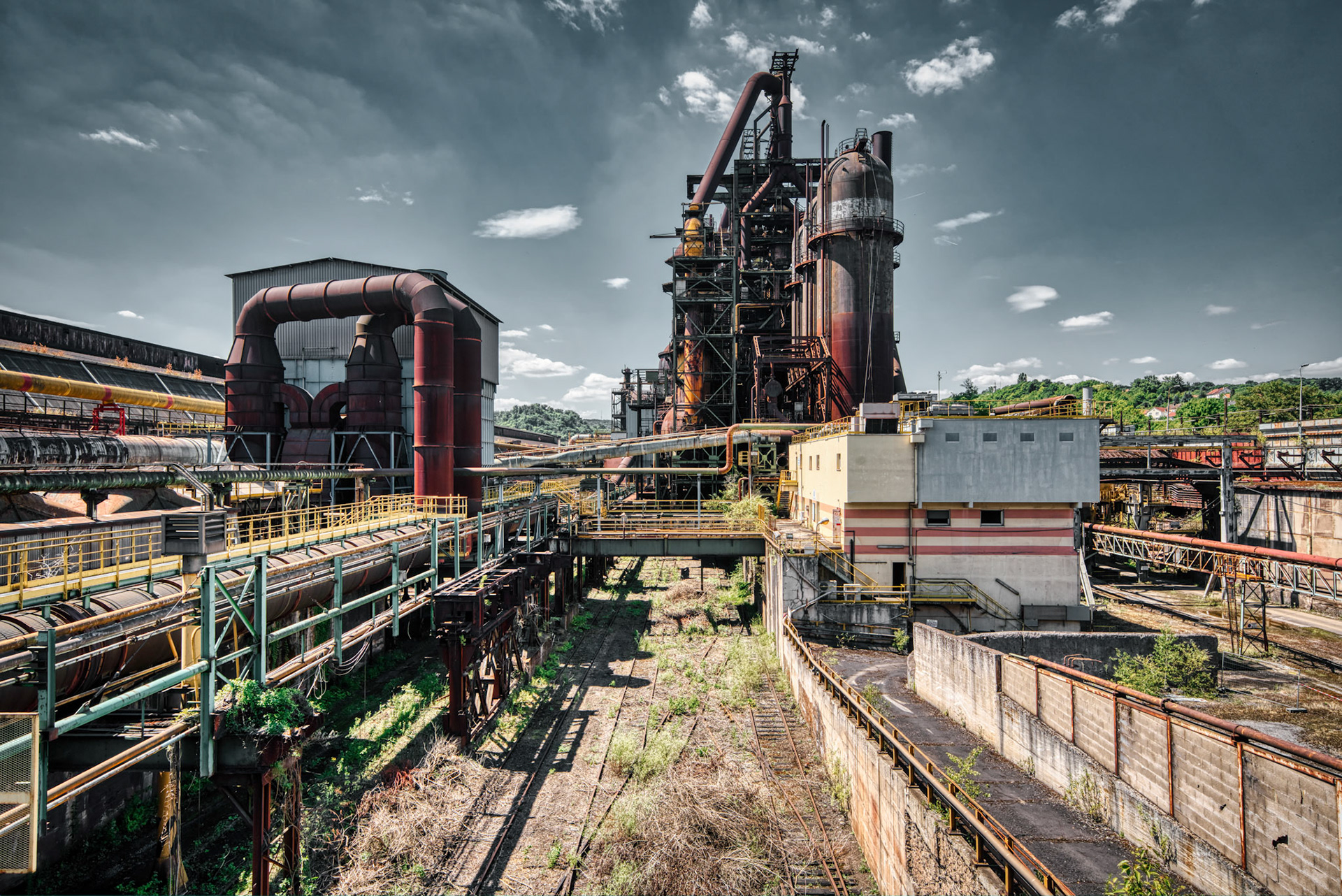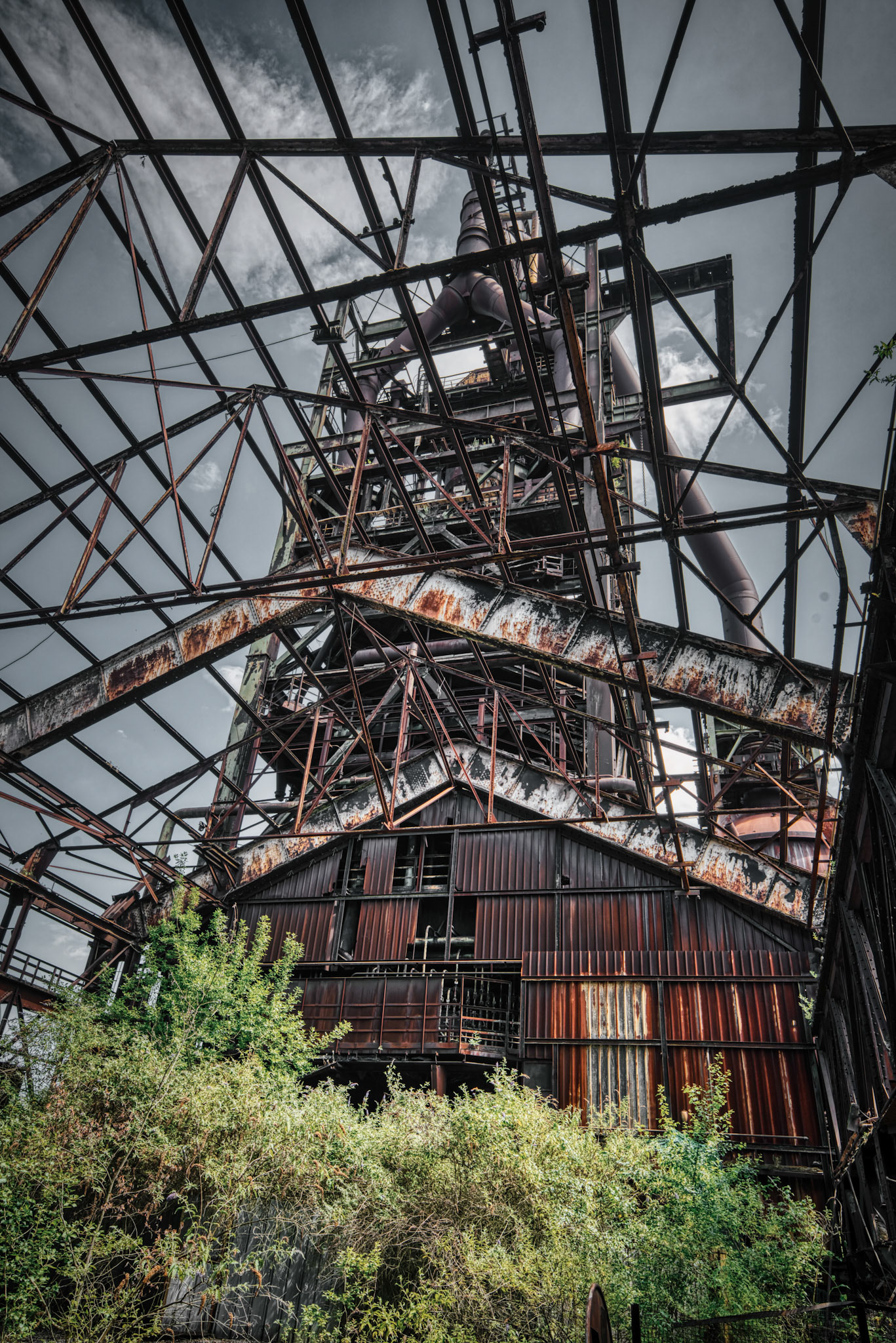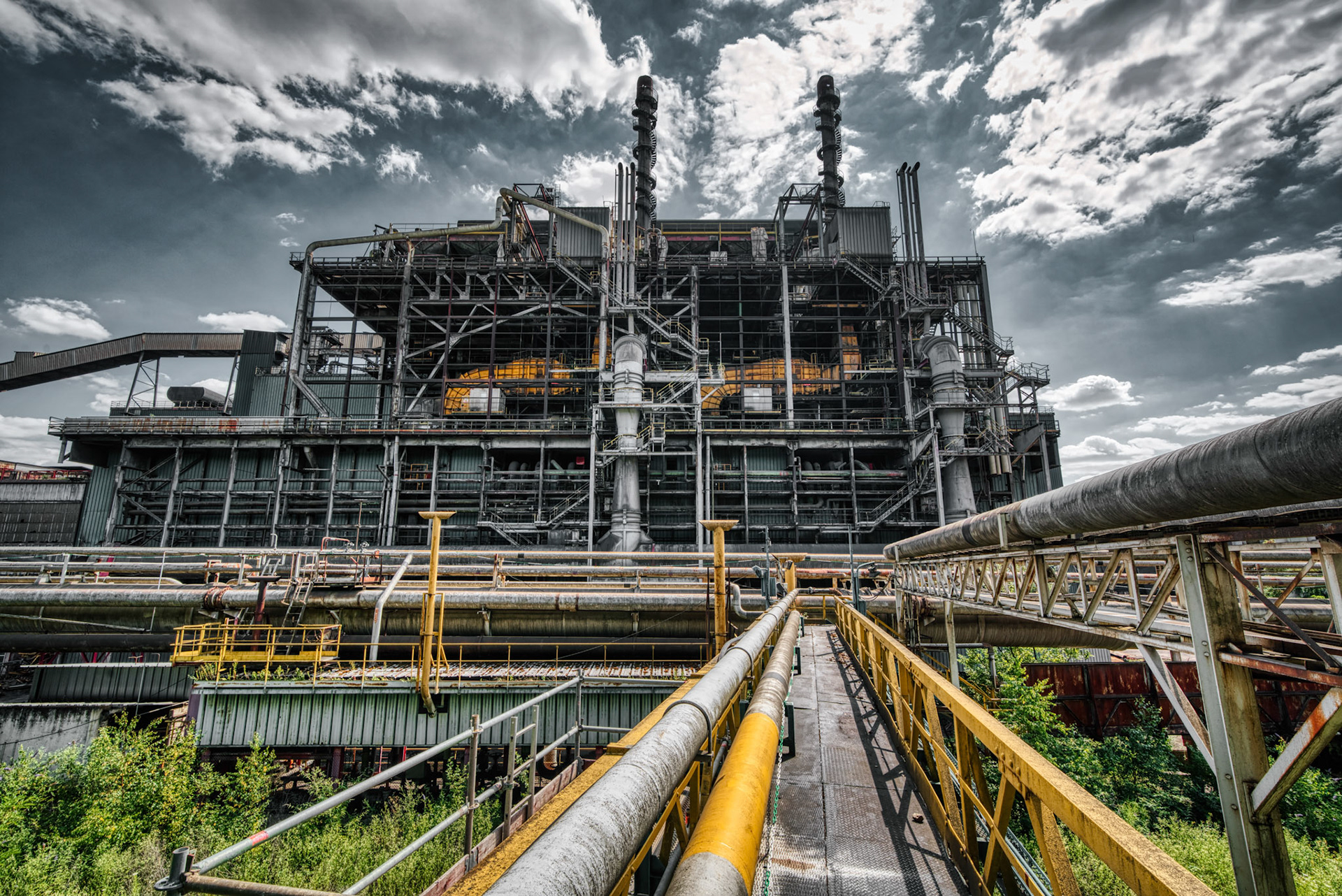
In the late nineteenth century, ironmaking advanced rapidly. Regions rich in iron ore prospered as the industry expanded, and vast industrial plants sprang up to meet demand. The blast furnaces and steelworks at Florange are a striking example of this growth. Major expansion followed in the early twentieth century: the first blast furnaces were built on the site in 1906, and a large steelworks was later added to convert pig iron into steel.
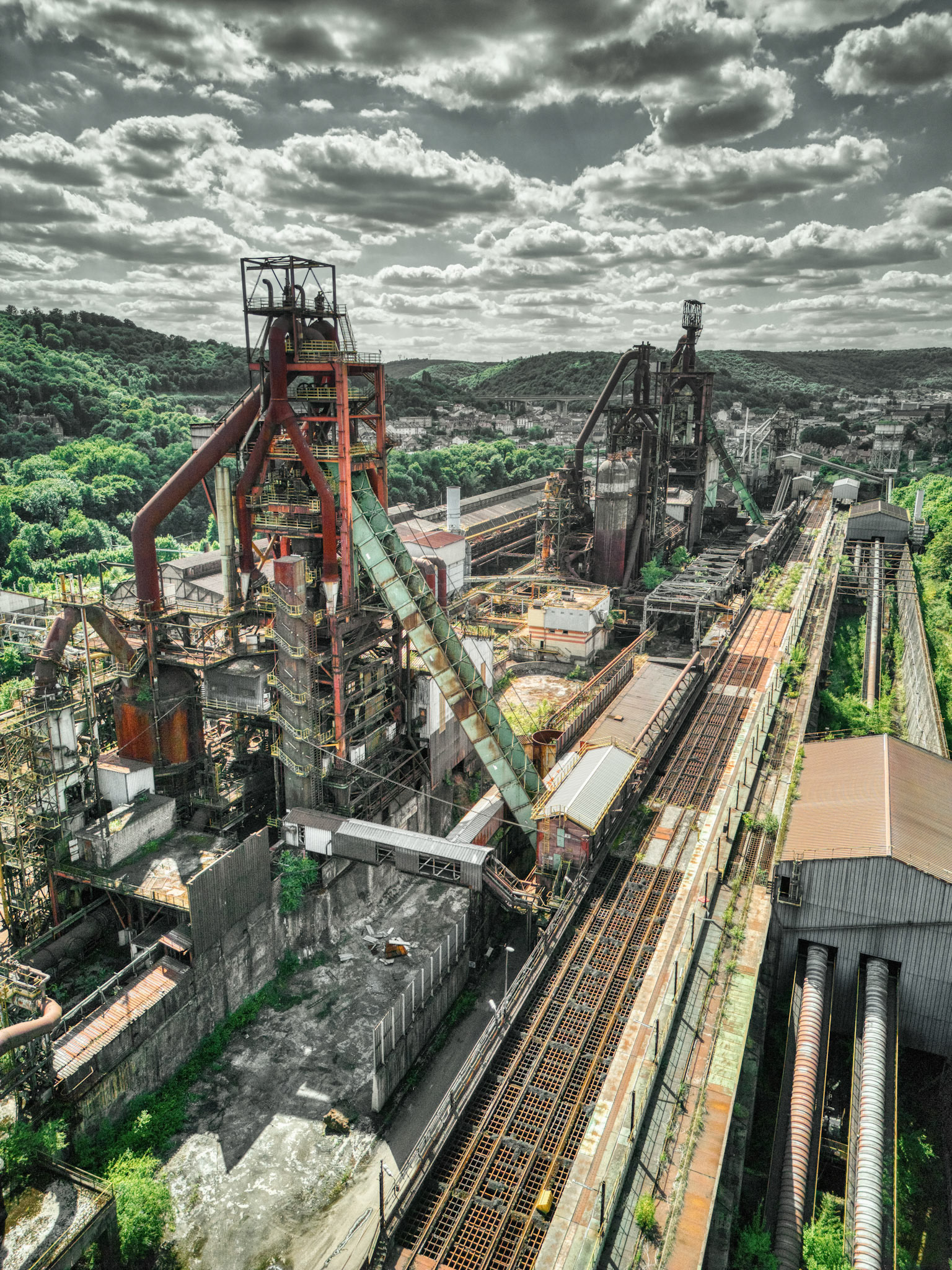
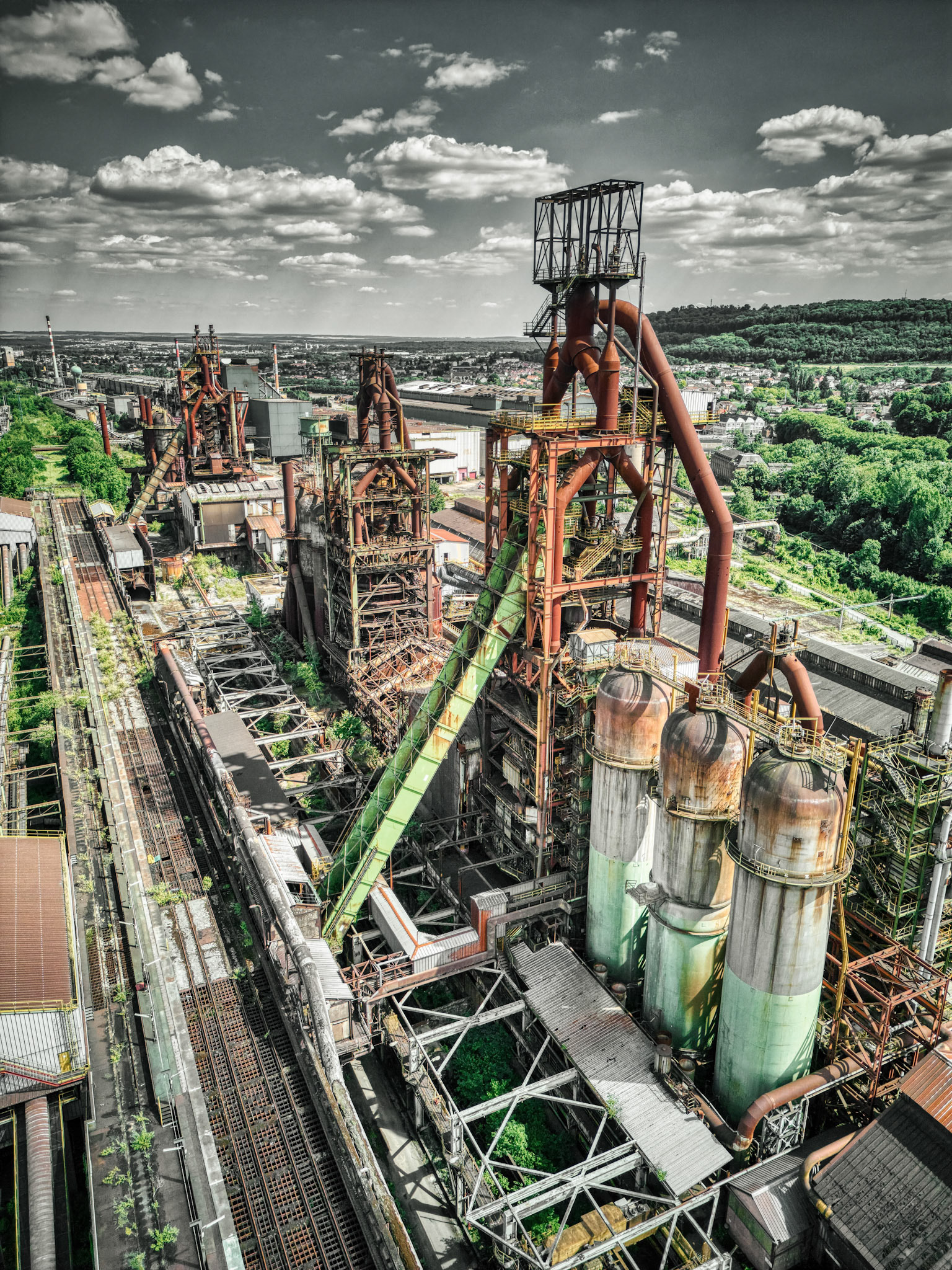
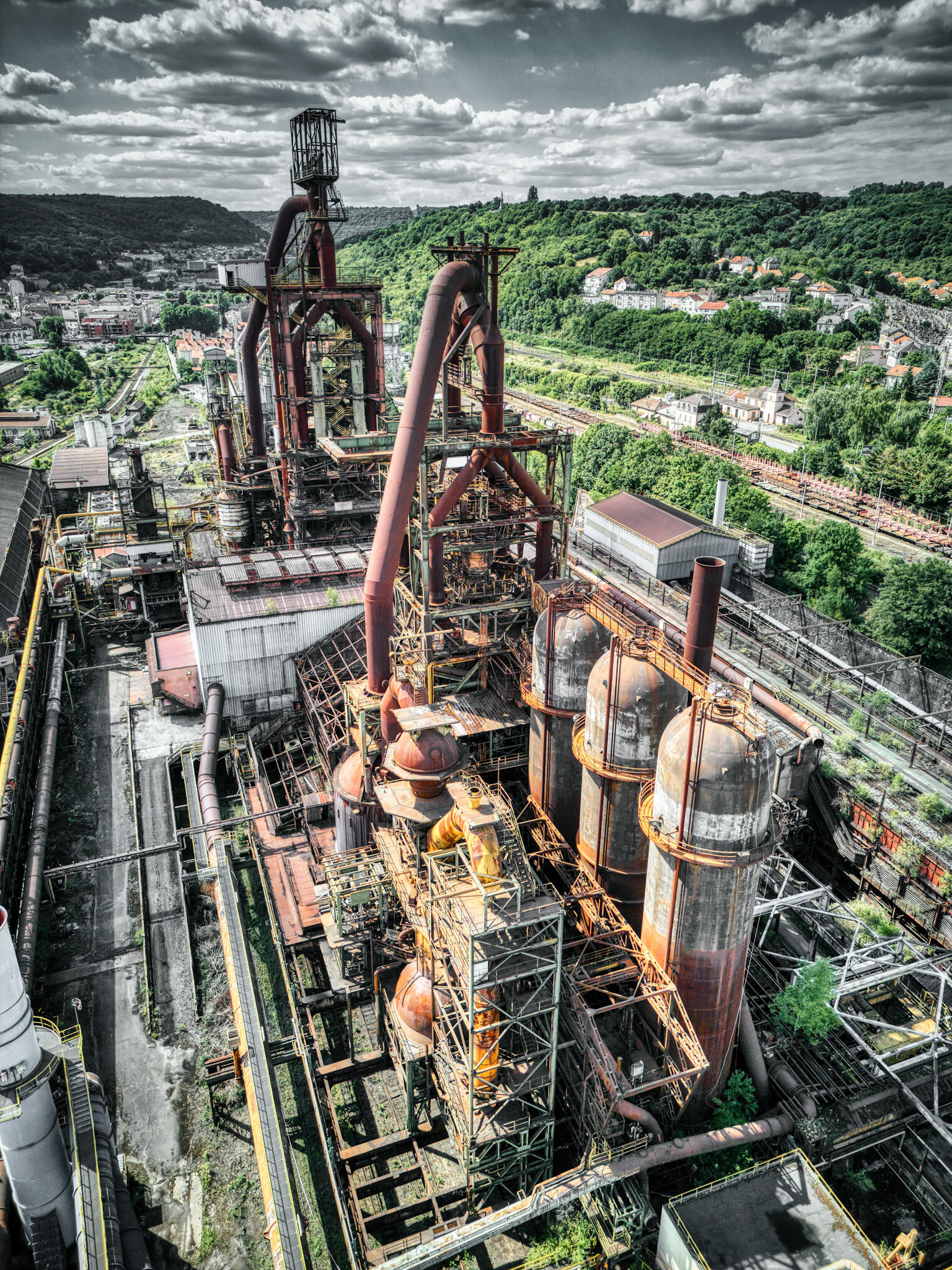
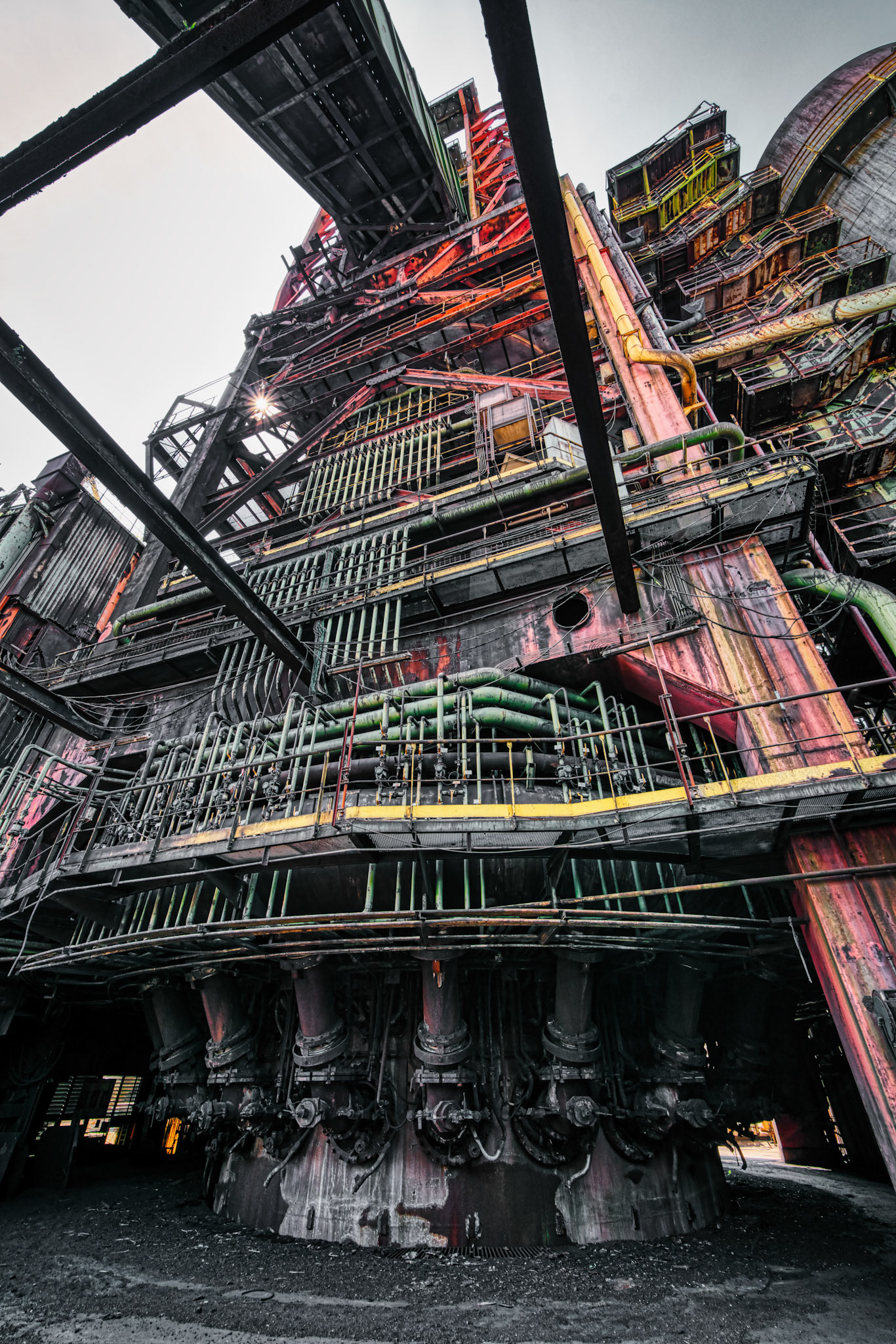
Over time, six blast furnaces were constructed at Florange. In the 1970s, three of them were extensively refurbished and their production capacities increased. The remaining three were taken out of service and later demolished.
Iron and steel production finally ended in 2012, when the last operating blast furnaces were mothballed. Although it was initially announced that the two furnaces would be kept in a restart-ready condition should market conditions improve, they were permanently shut down the following year.
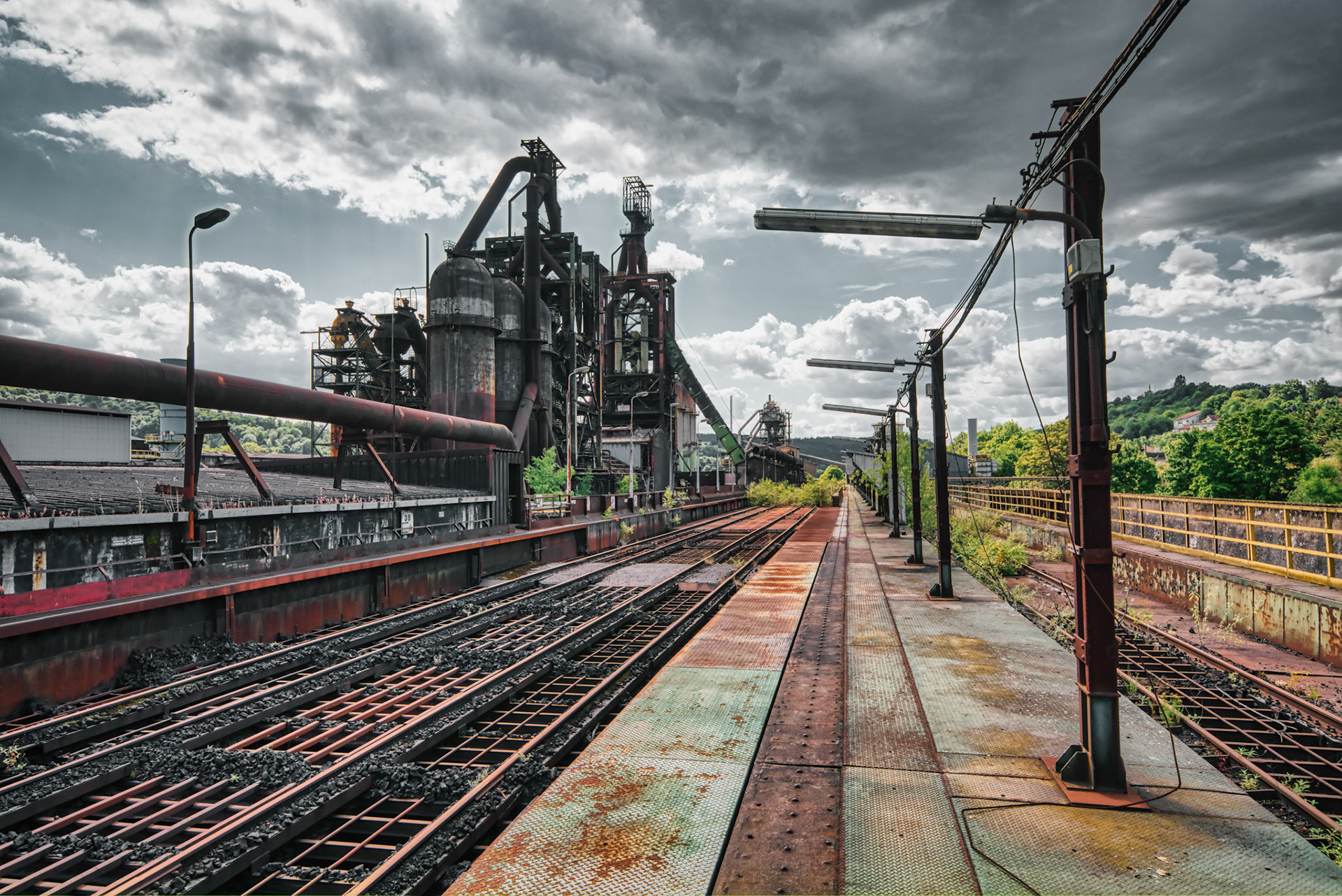
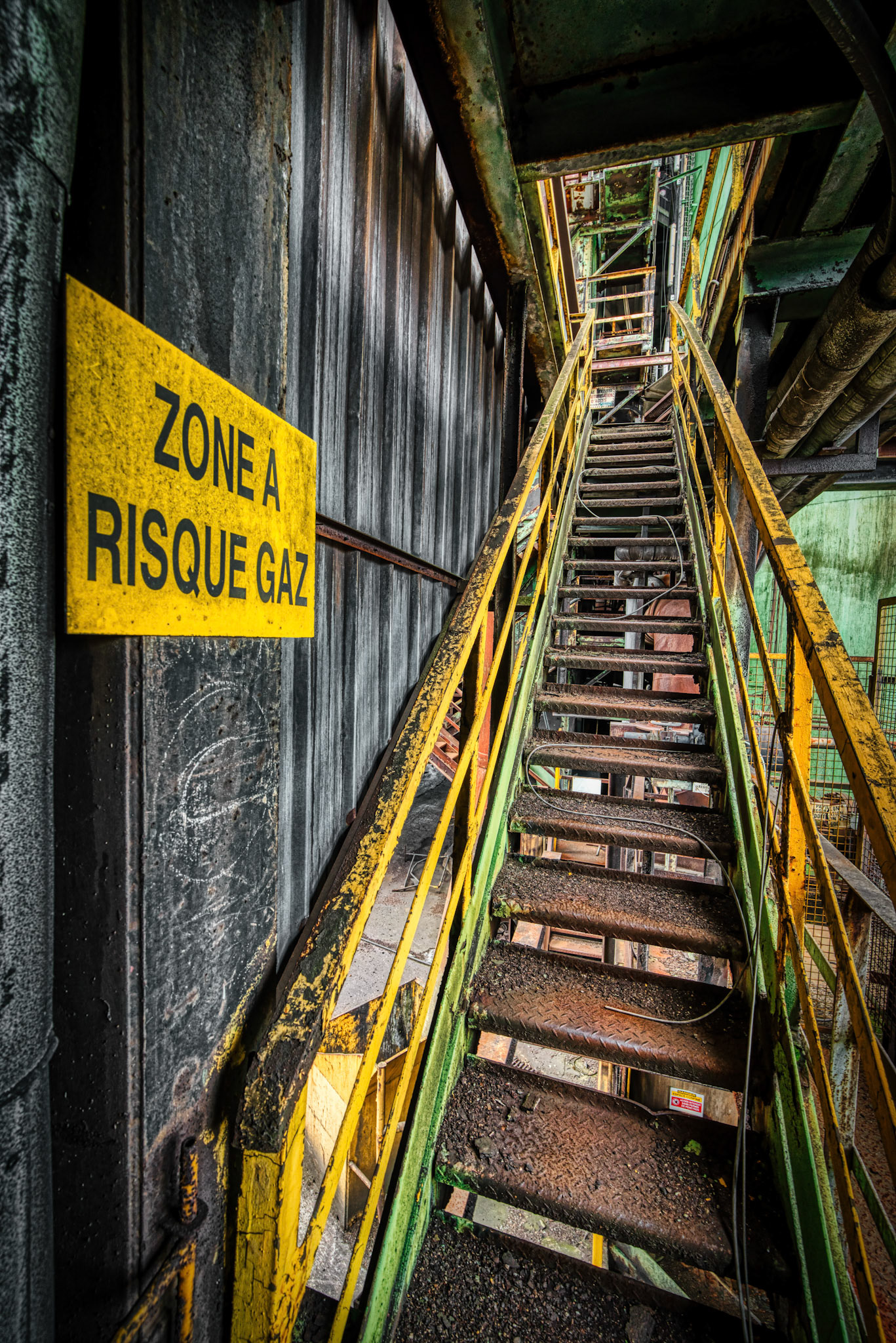
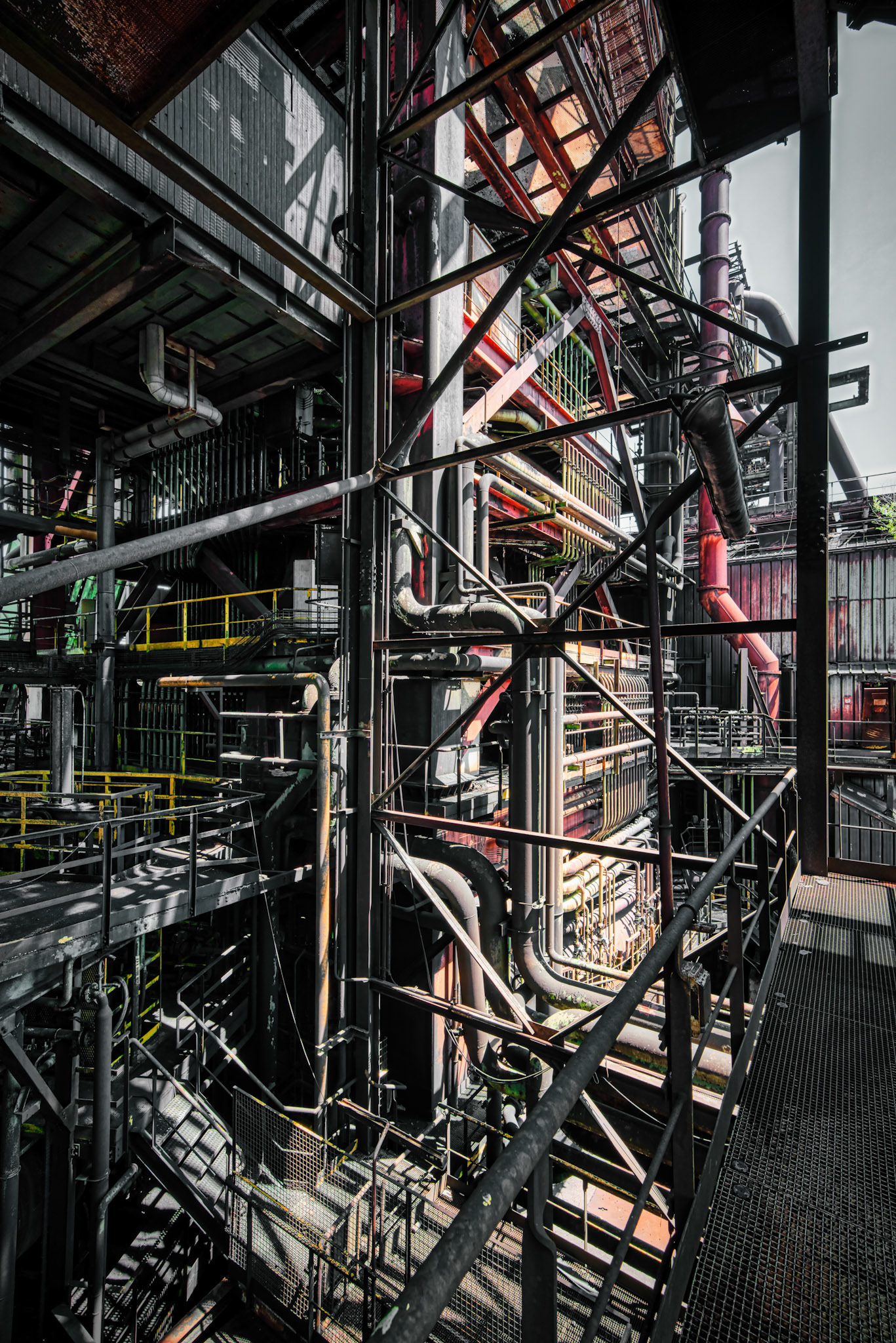
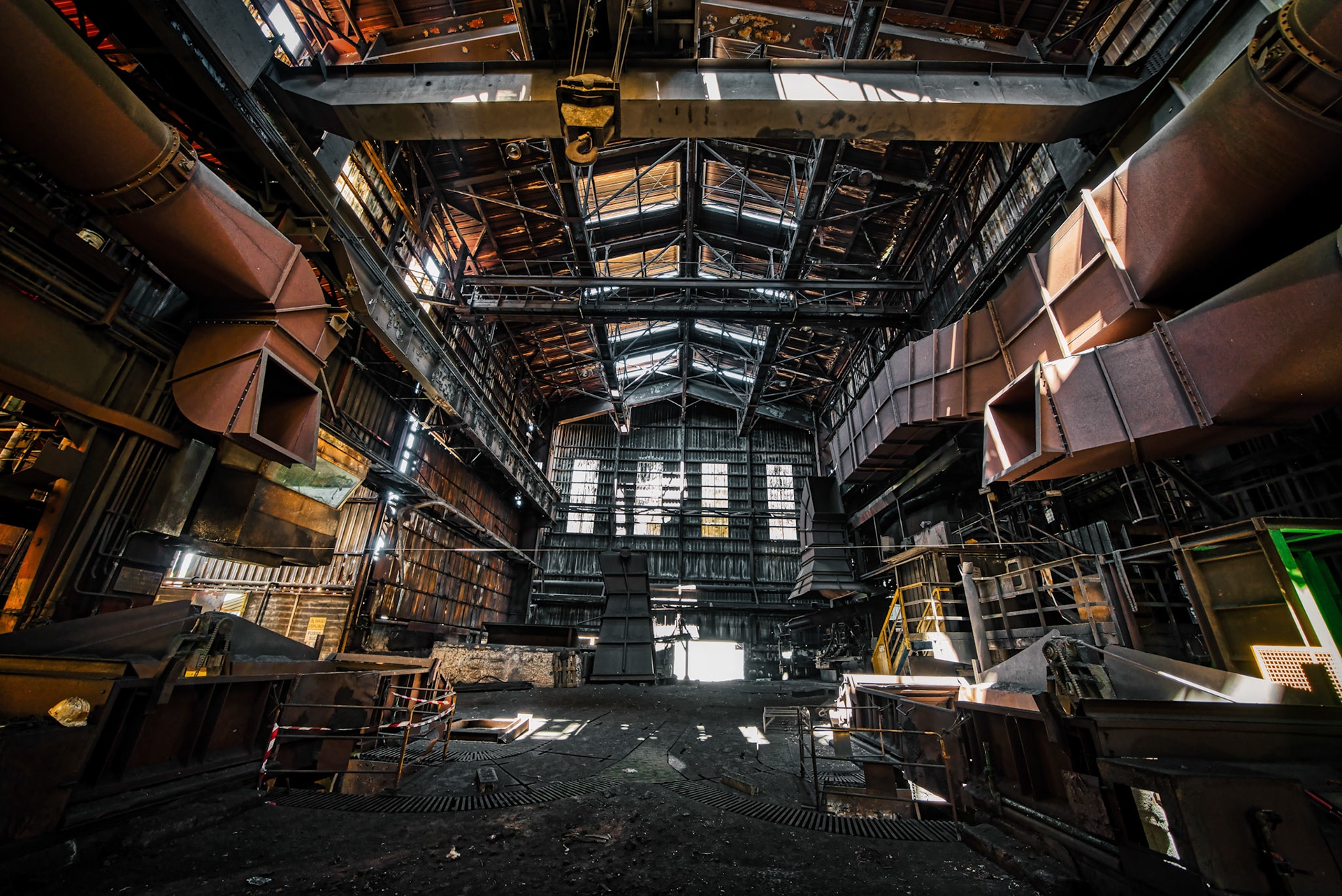
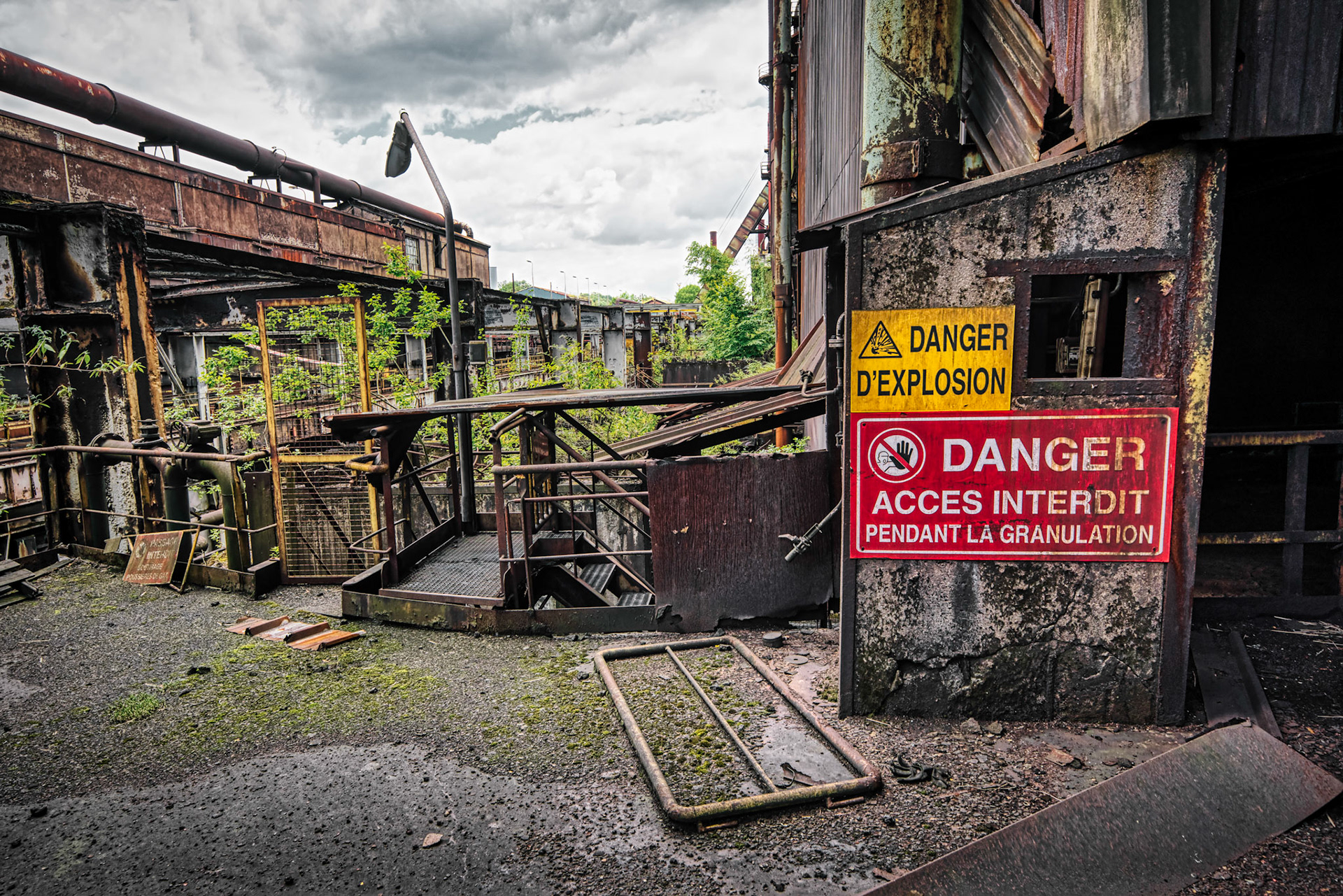
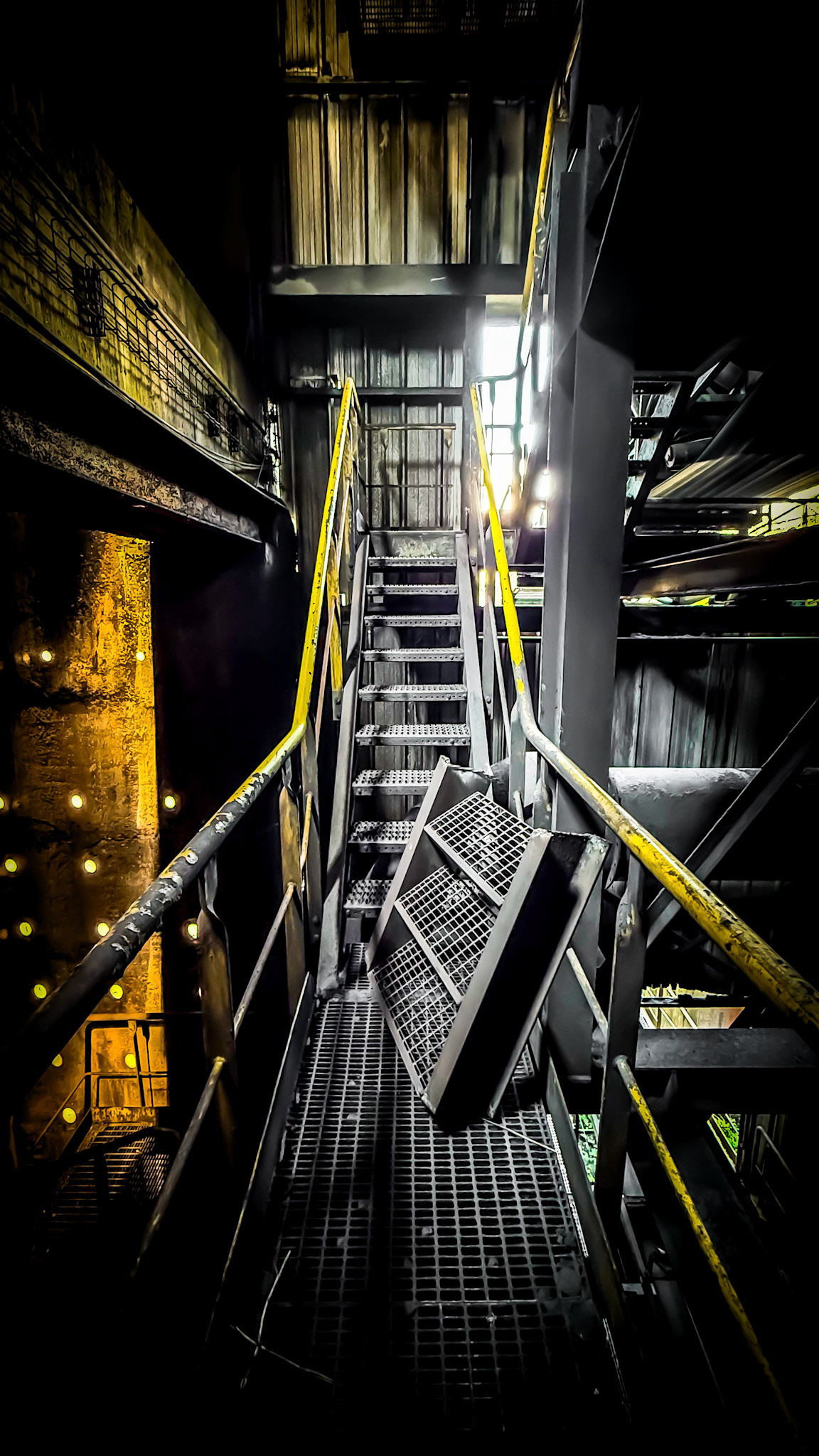
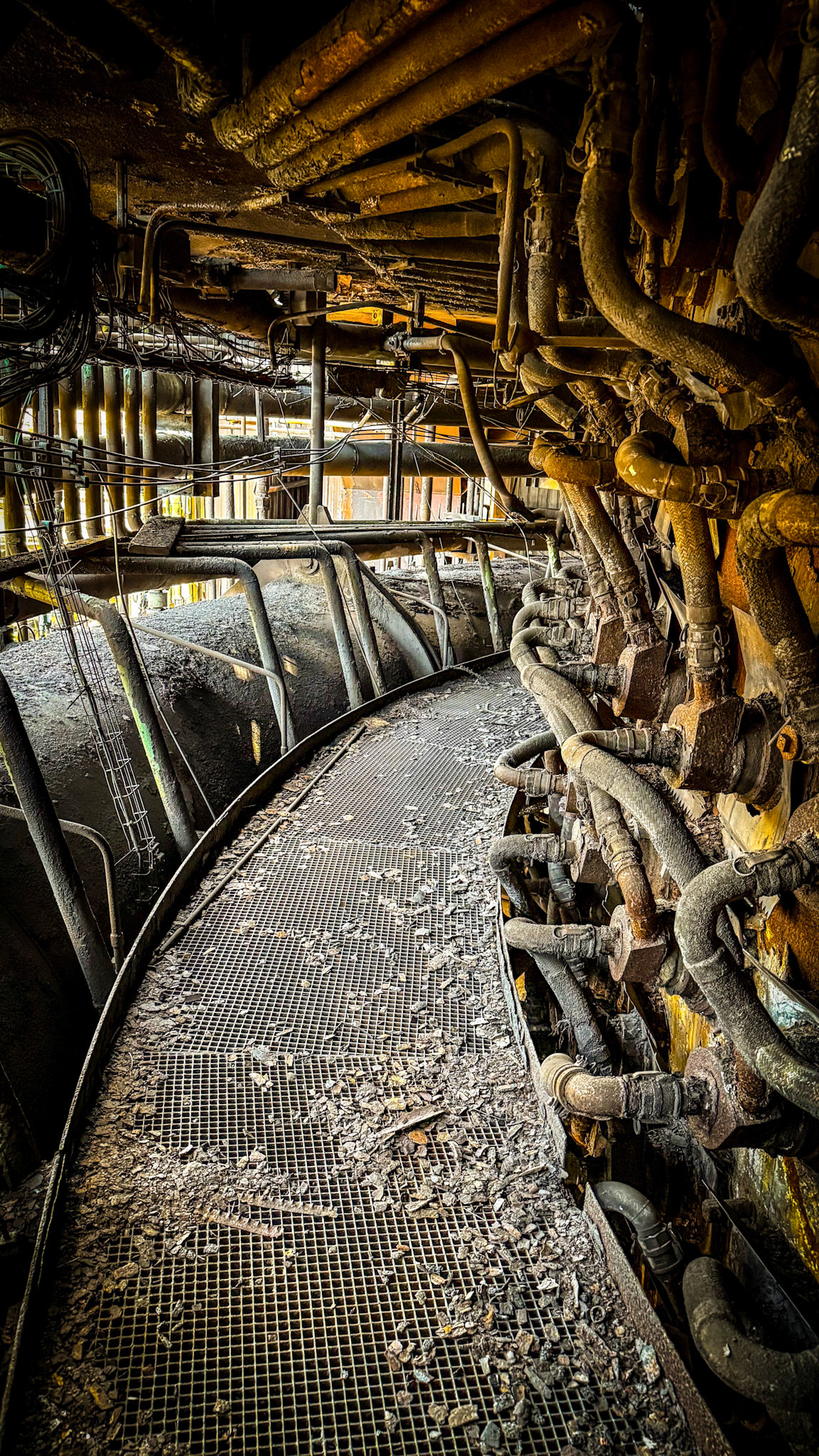
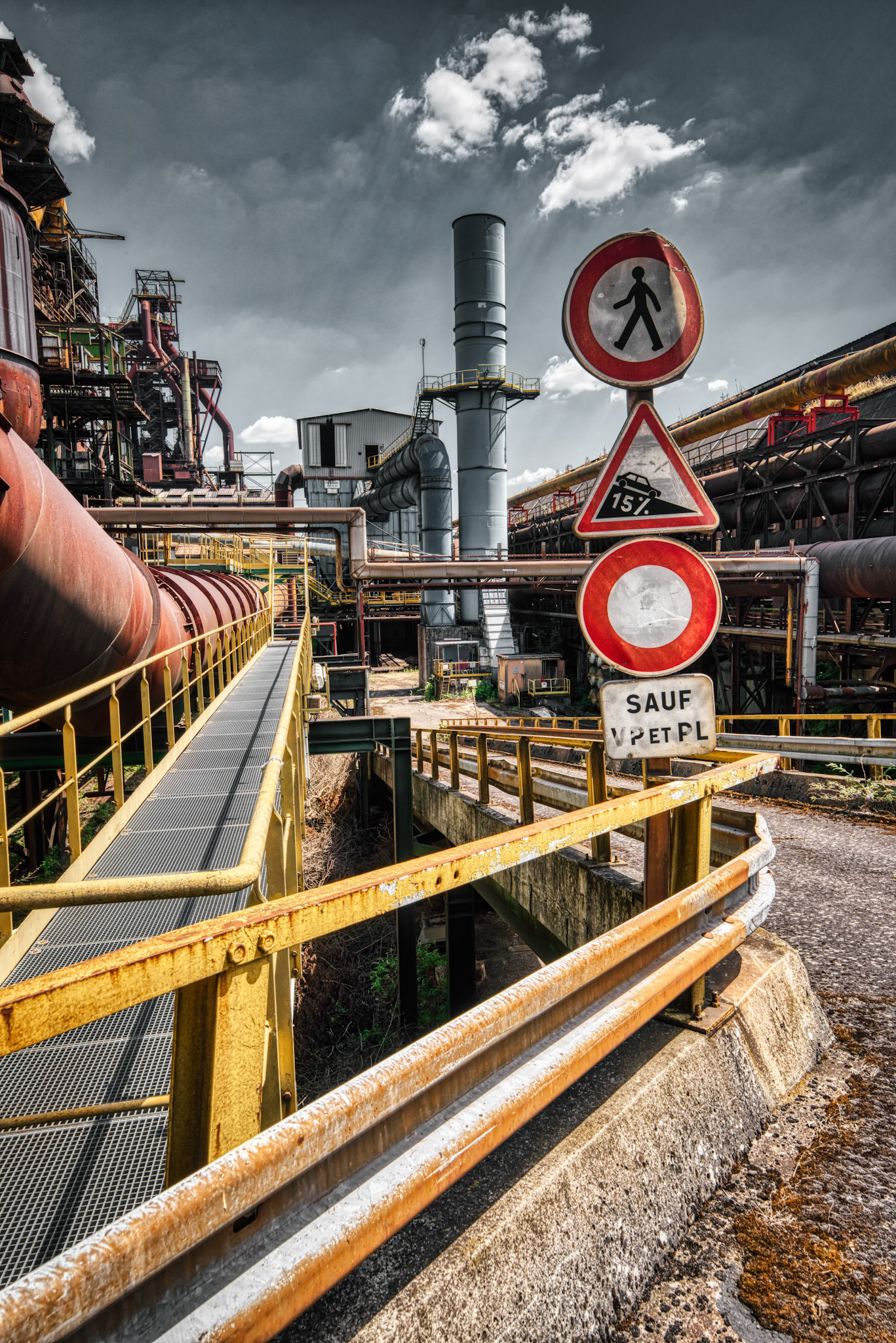
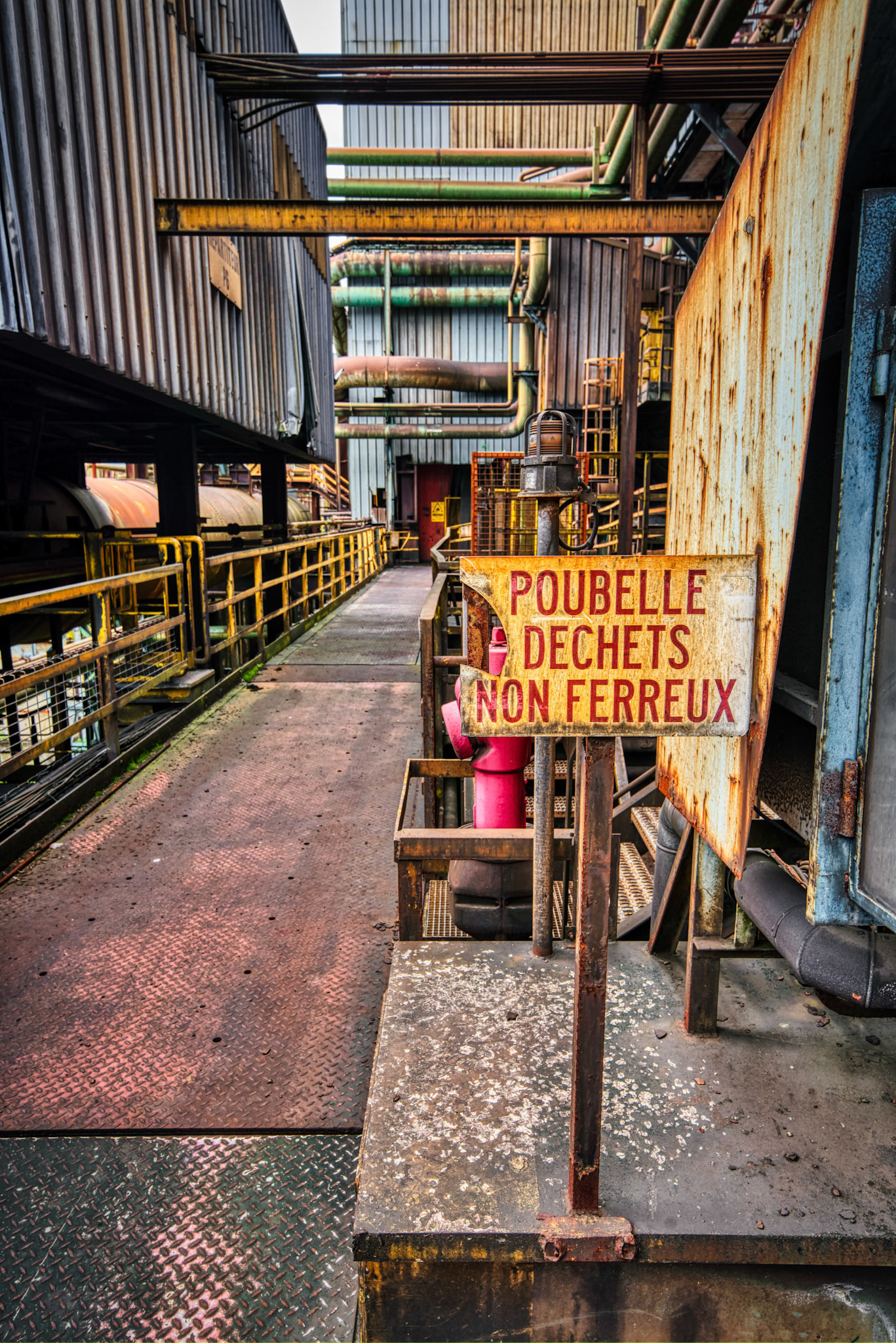
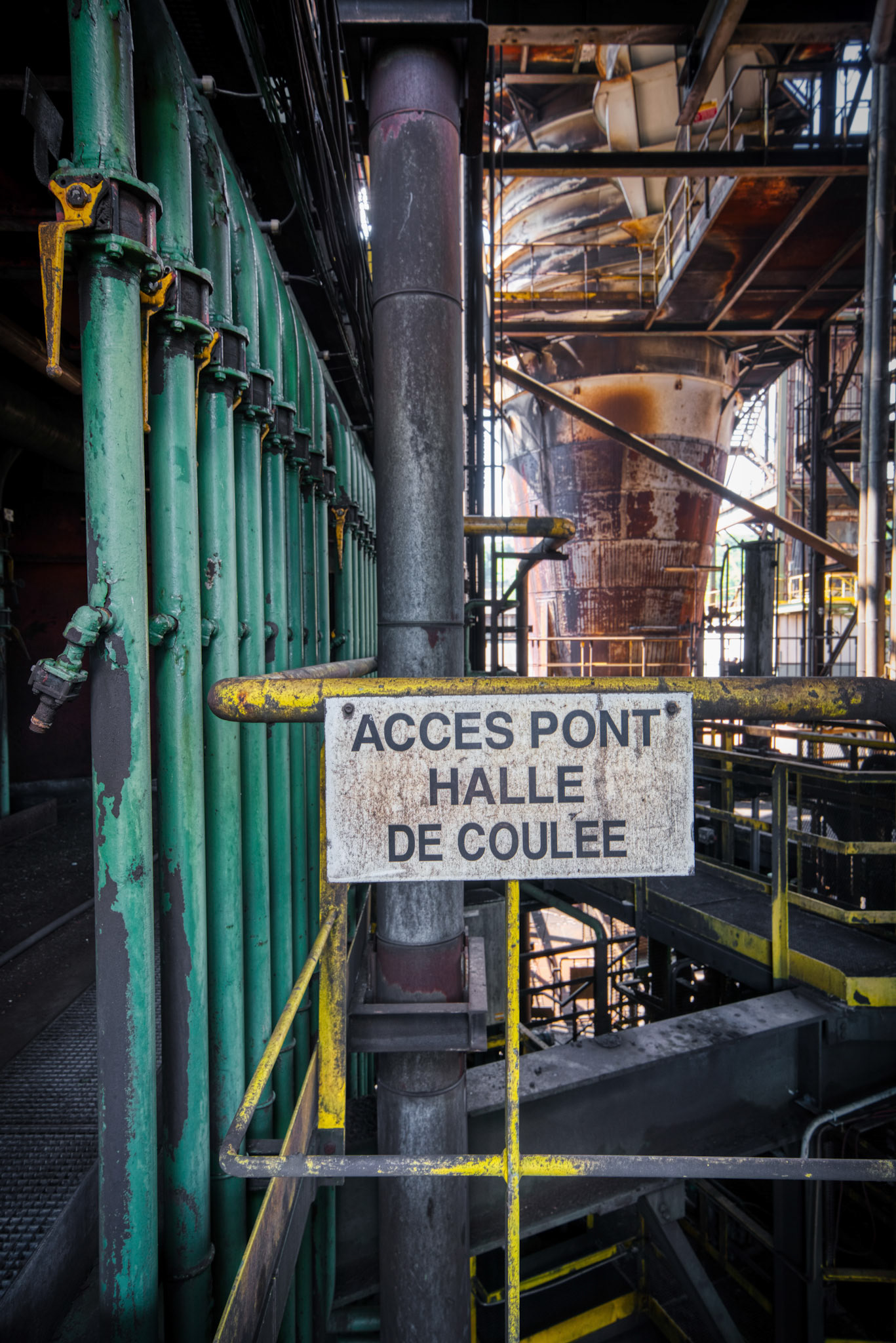
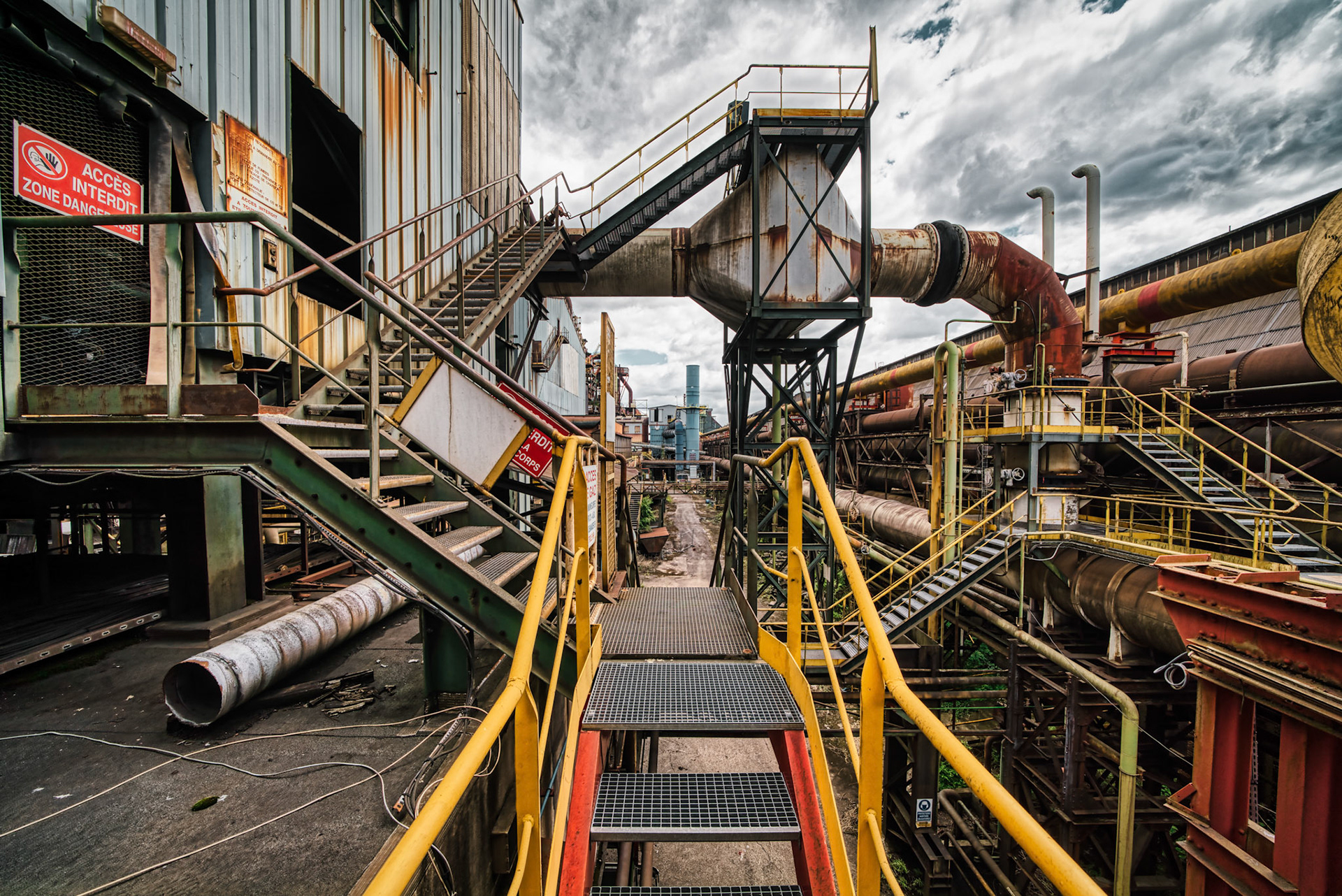
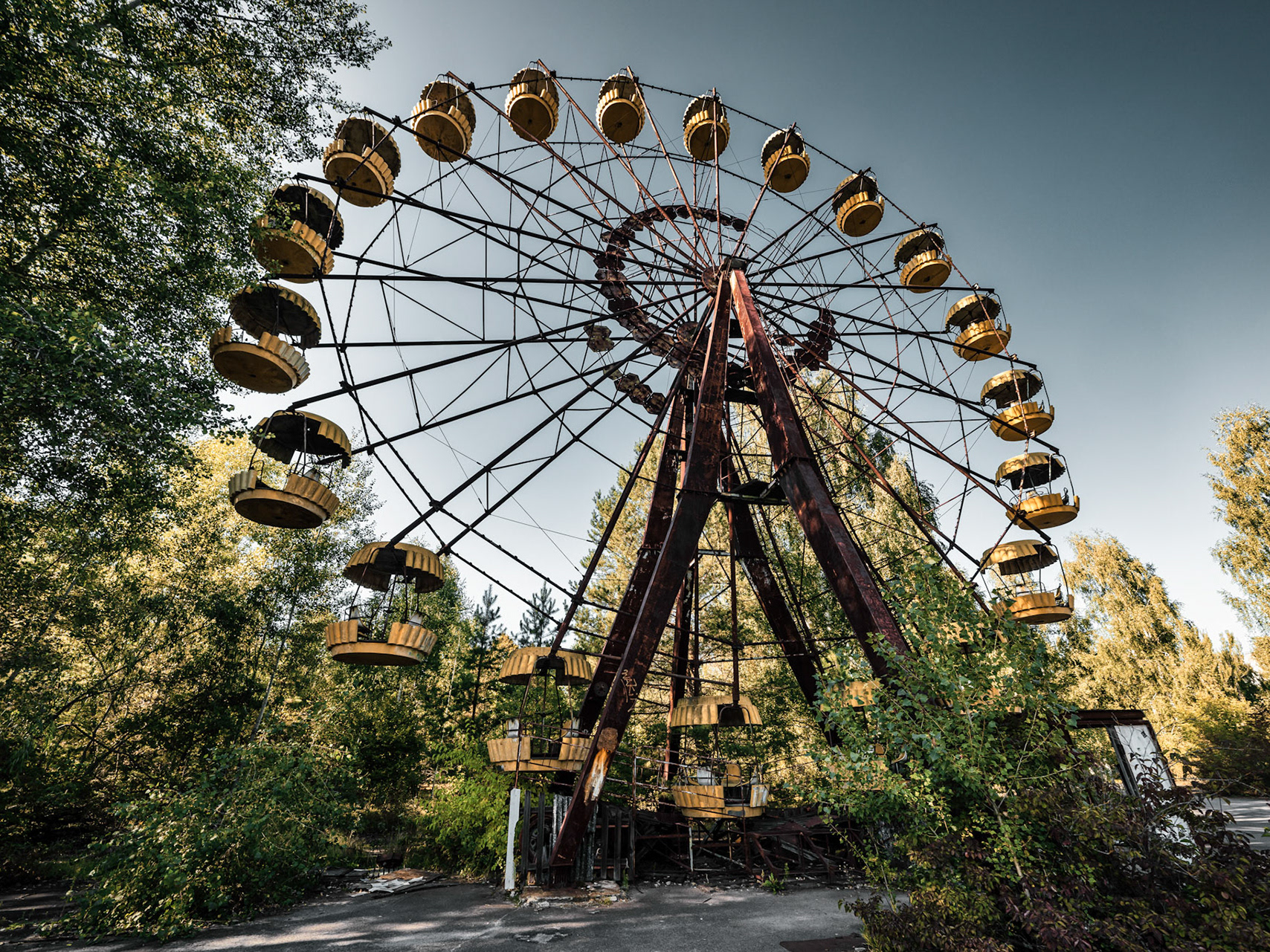
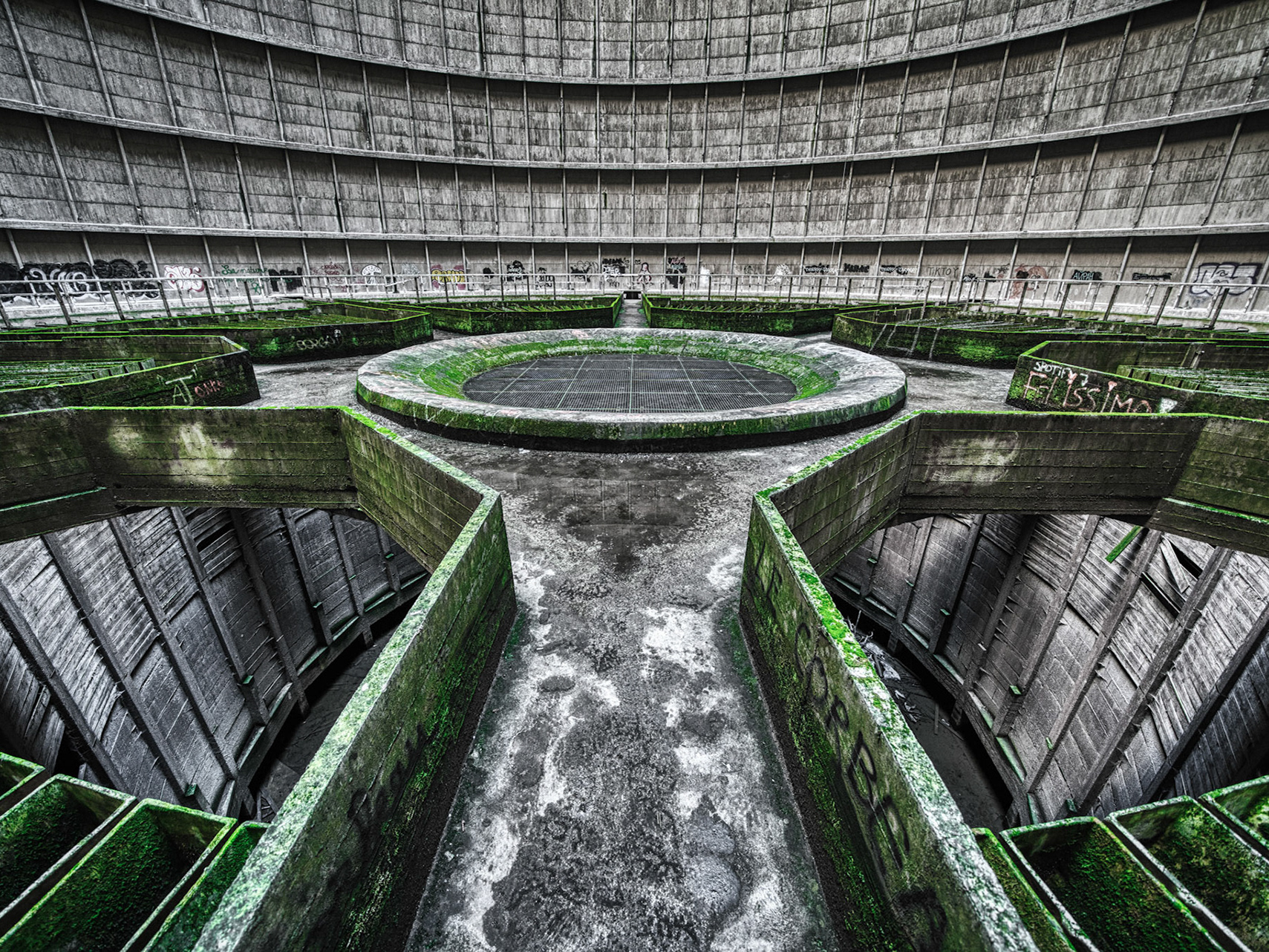
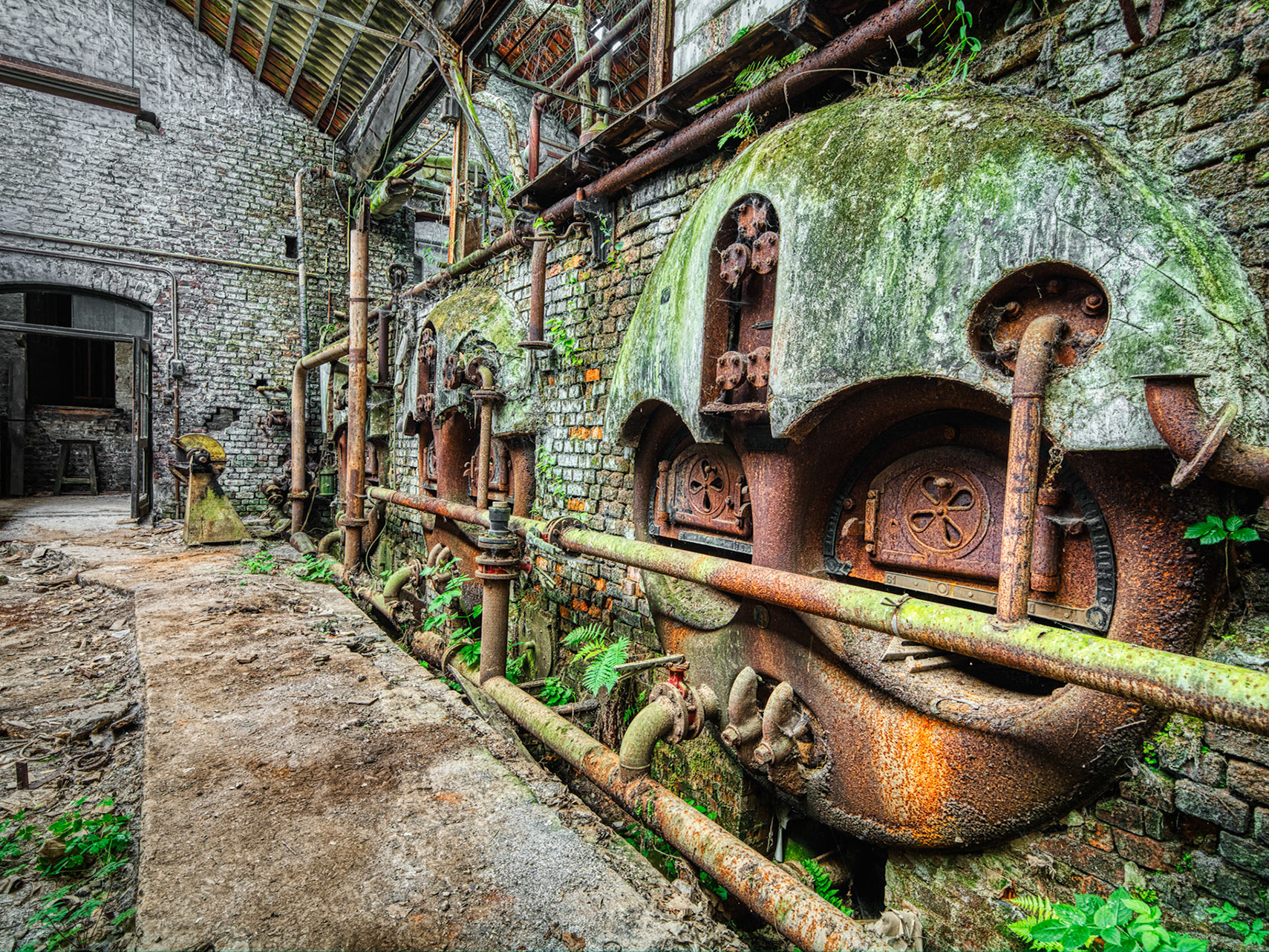
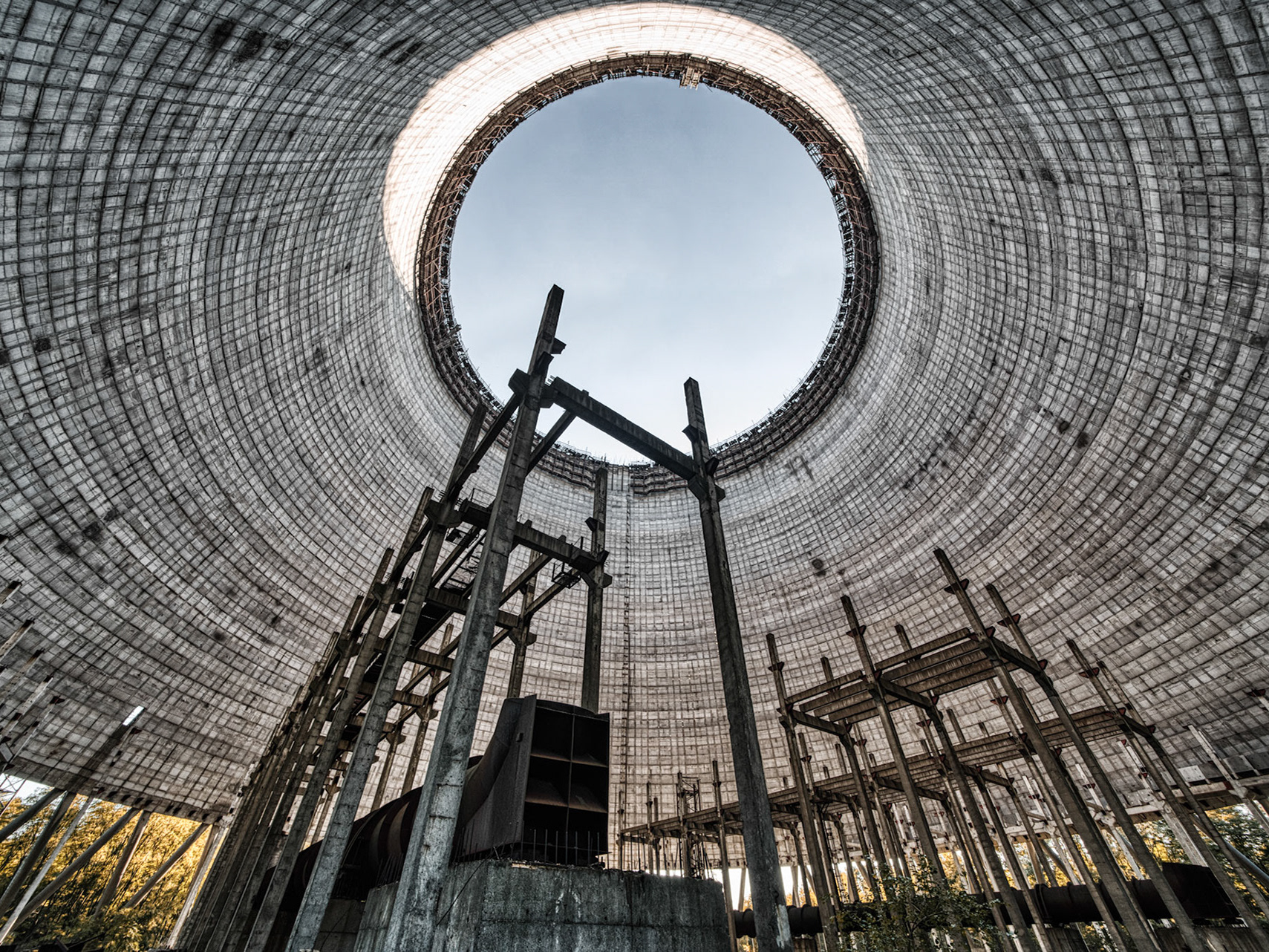
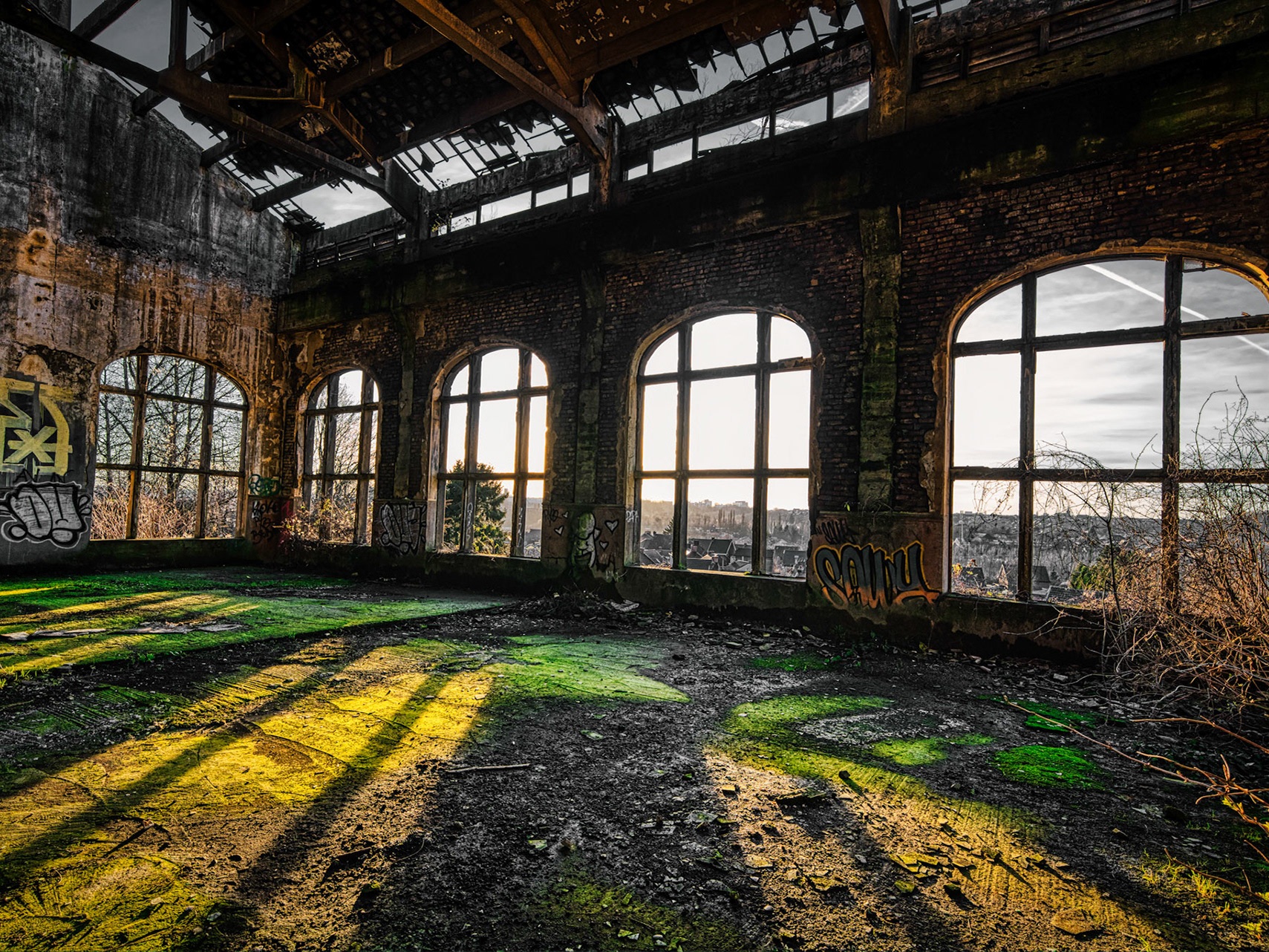
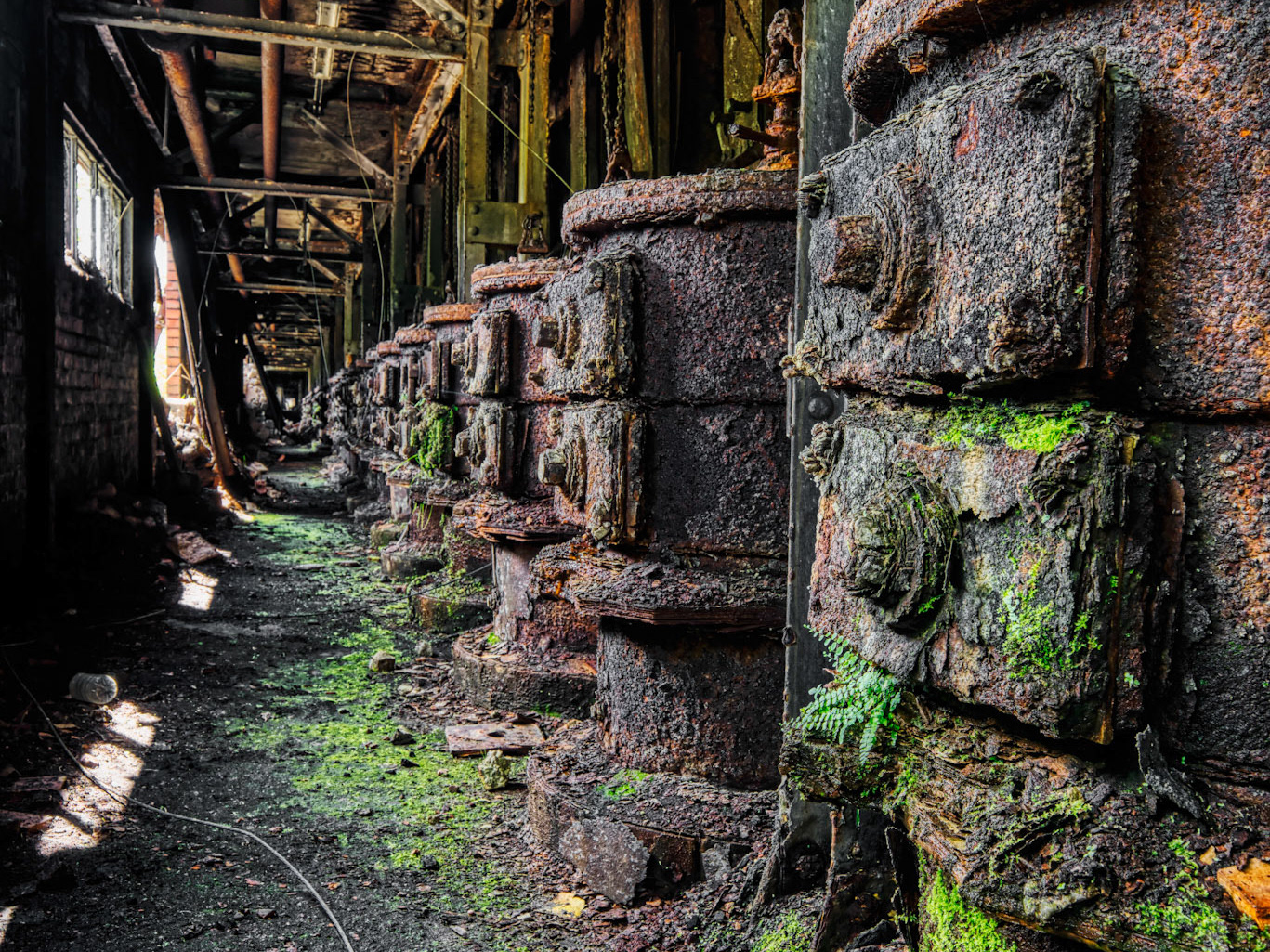
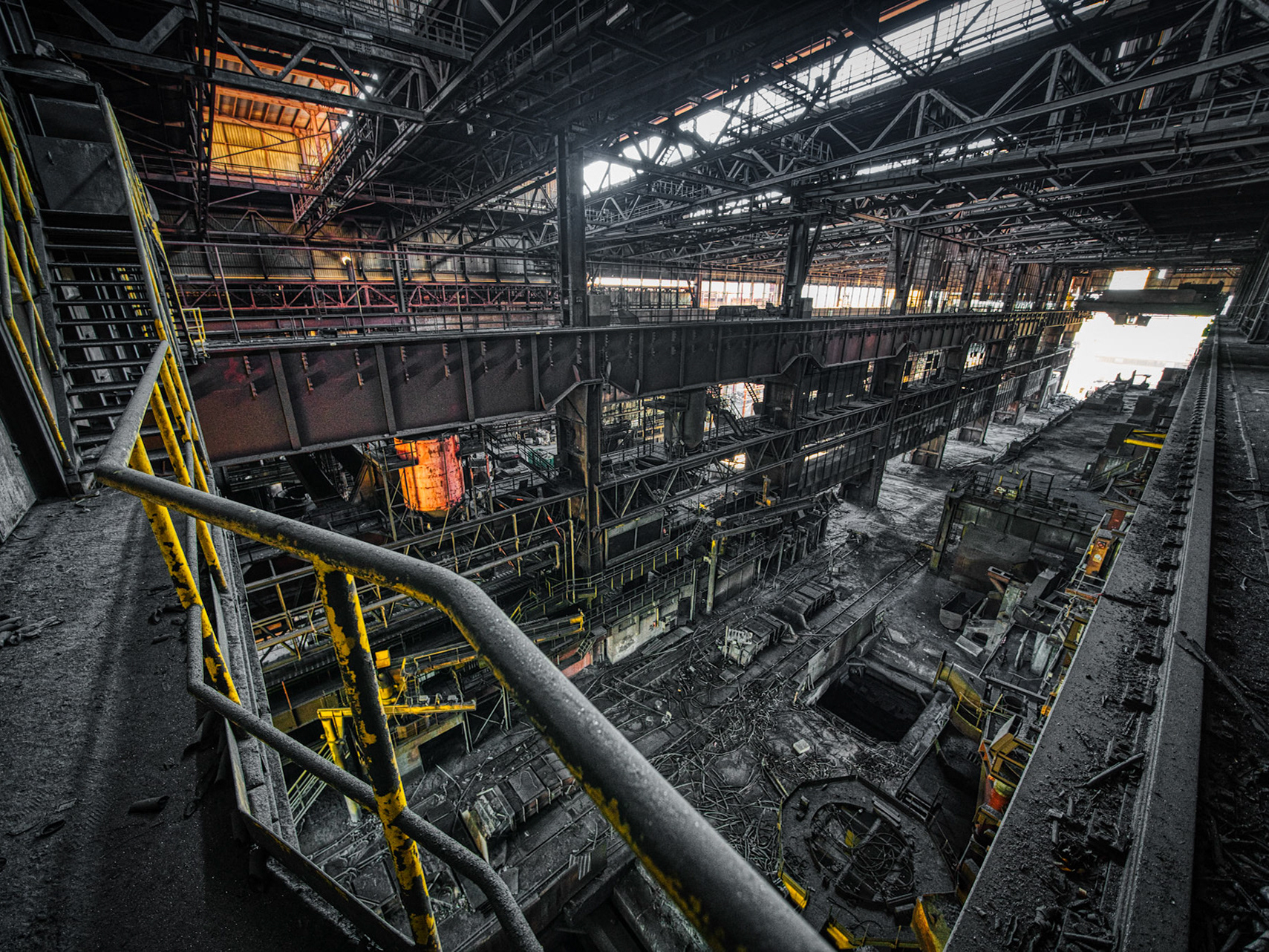
Today, the steelworks and furnaces lie dormant. Silent, lifeless structures slowly rusting as nature reclaims the site. The rail yard has fallen quiet, overgrowth pushing through ballast and broken ground. Inside the vast halls, machinery stands still, and the furnaces remain cold.